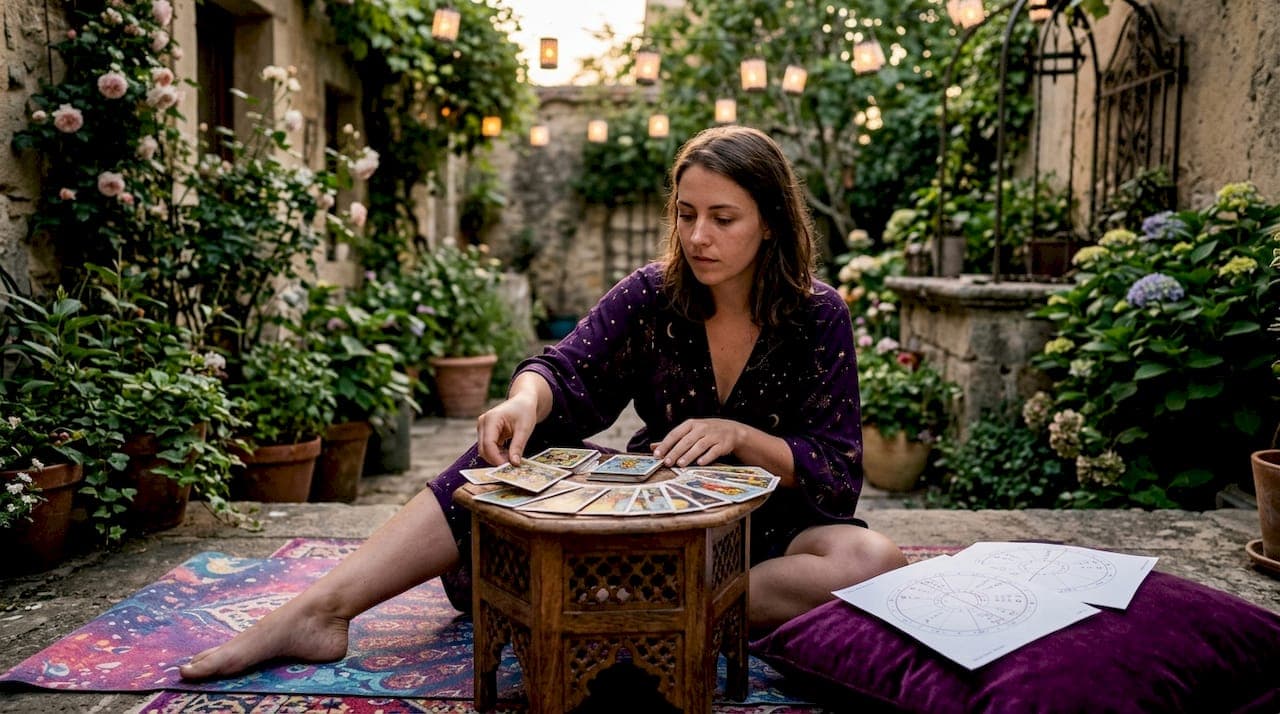
Combining tarot with astrology readings is defined as the practice of using astrological context, such as planetary transits, zodiac signs, and lunar phases, alongside tarot card draws to produce layered, multidimensional guidance. This approach, formally rooted in the Golden Dawn correspondence system, maps all 78 tarot cards to planets, zodiac signs, and 36 zodiac decans. The result is a reading method that answers both "when and why" through astrology and "how and what" through tarot. You get cosmic timing plus intuitive insight in a single session.
How to combine tarot with astrology readings: the foundational correspondences
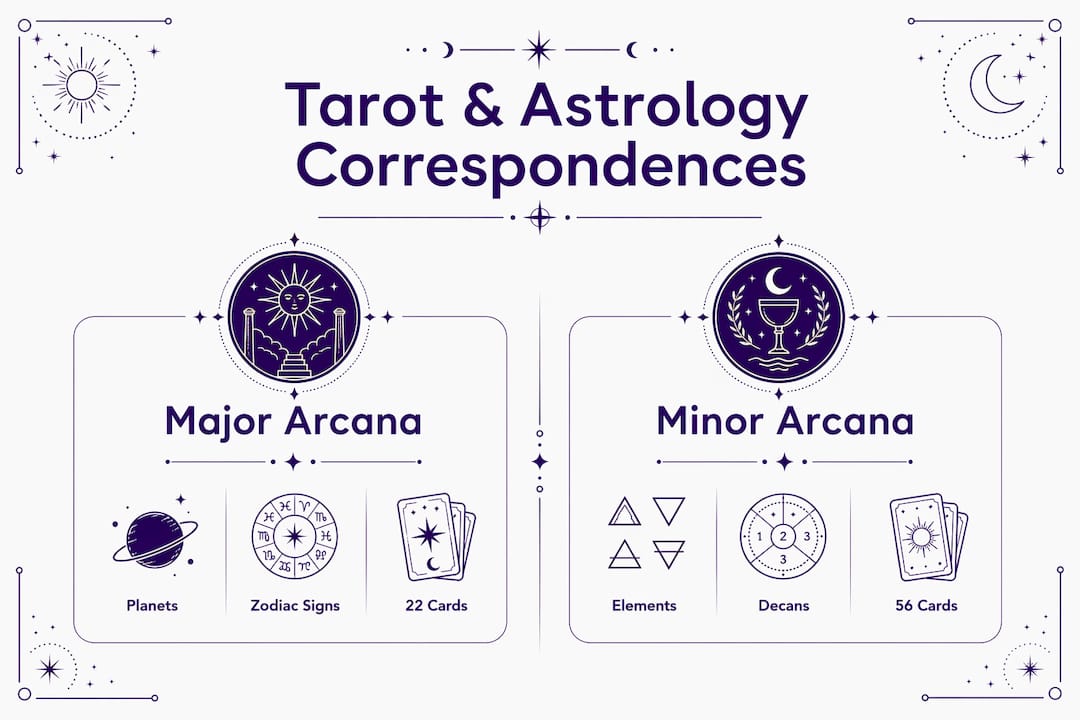
The Golden Dawn system links every one of the 78 tarot cards to astrological components through four elements, 12 zodiac signs, and the classical planets. This is not a loose thematic overlap. It is a structured symbolic map that experienced readers use to cross-reference card meanings with live astrological conditions.
Major Arcana and planetary or zodiac assignments
The 22 Major Arcana cards each correspond to a planet or zodiac sign. The Emperor connects to Aries. The High Priestess links to the Moon. The Lovers align with Gemini. These assignments give each Major Arcana card a built-in astrological personality that deepens its meaning during a reading.
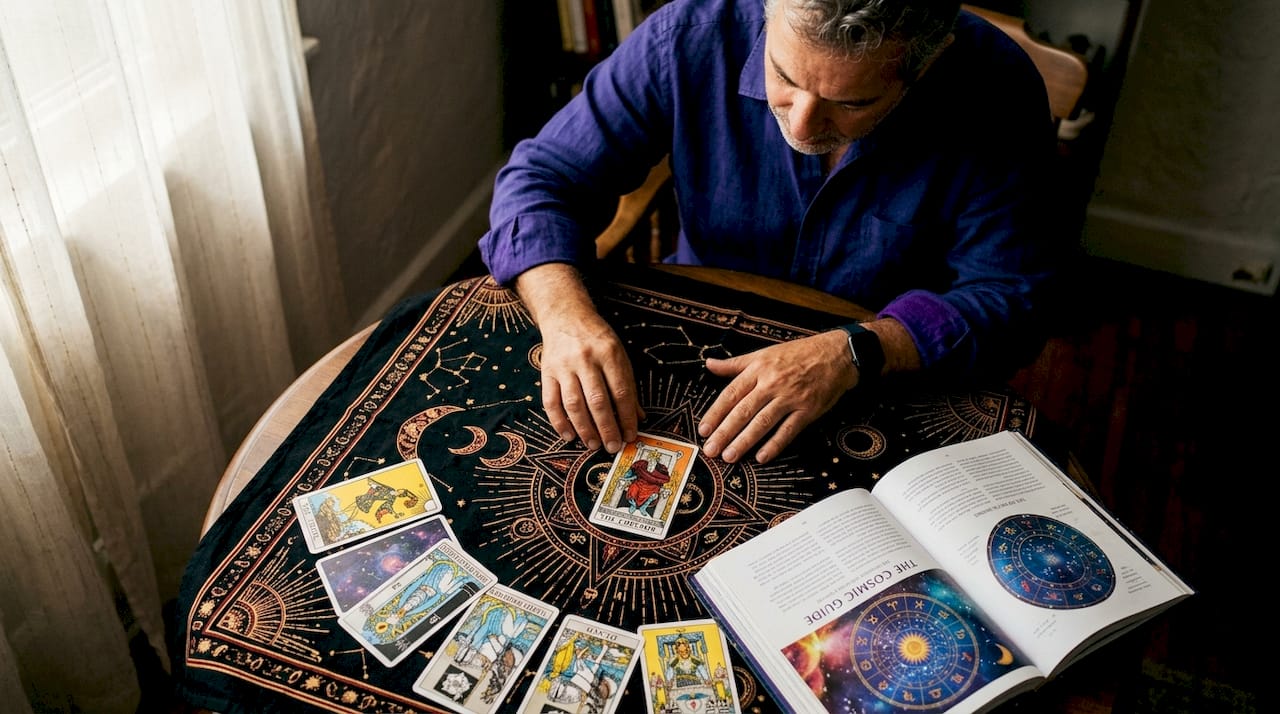
Minor Arcana and the 36 decans
The 36 numbered pip cards (Ace through Ten in each suit) map to the 36 zodiac decans, which are 10-degree segments of the zodiac. When Mars transits 0–10 degrees of Aries, for example, it activates Two of Wands themes of initiation and personal power. This decan system lets you track which tarot themes are cosmically "live" at any given moment.
Court cards and elemental blends
Court cards represent elemental blends within zodiac quadrants. The Knight of Cups, for instance, carries the water element of the Cup suit combined with the fire energy of his knight rank, placing him in the cusp zone between Aquarius and Pisces. Understanding these blends helps you read court cards as personality types or situational energies rather than fixed characters.
The table below shows the four tarot suits, their elements, and their corresponding zodiac signs.
| Tarot Suit | Element | Corresponding Zodiac Signs |
|---|---|---|
| Wands | Fire | Aries, Leo, Sagittarius |
| Cups | Water | Cancer, Scorpio, Pisces |
| Swords | Air | Gemini, Libra, Aquarius |
| Pentacles | Earth | Taurus, Virgo, Capricorn |
Pro Tip: Start by memorizing just the suit-to-element-to-sign table above. Once that feels natural, add one Major Arcana planet per week. You will build a working reference system within a month without overwhelming yourself.
How do you practically run a combined reading?
Astrology answers "when" and "why"; tarot answers "how" and "what." The practical method follows that division directly. Set your astrological context first, then draw cards to explore your response to that context.
Step-by-step process for a combined session
- Check your astrological context. Note the current lunar phase, any active planetary transits, and which natal chart houses those transits are moving through. A Saturn transit through your 7th house, for example, signals themes of commitment and relationship structure.
- Choose a spread that matches the context. Three core spreads work well for astrology tarot interpretation. The Zodiac Wheel Spread assigns one card to each of the 12 houses, revealing energies across all life areas. The Sun-Moon-Rising Spread uses three cards matched to your natal Sun, Moon, and Rising signs to outline personality dynamics. The Transit Support Spread draws cards to clarify the lessons or decisions tied to a specific major planetary shift.
- Draw your cards and note the astrological resonance. If a Saturn transit is active and you draw the Ten of Pentacles, the card's themes of legacy and long-term stability directly echo Saturn's demand for structure. That alignment is confirmation, not coincidence.
- Interpret the card as your response, not a prediction. The card shows how you are experiencing or can navigate the astrological weather. It does not tell you what will happen.
- Note lunar timing for intention or release work. New Moons support intention setting; Full Moons support releasing what no longer serves you. Drawing cards on these dates adds a natural rhythm to your practice.
The table below summarizes the three main integration methods and when each works best.
| Method | Best Used When |
|---|---|
| Zodiac Wheel Spread | You want a full-life overview tied to all 12 houses |
| Sun-Moon-Rising Spread | You are exploring identity, emotion, and public persona |
| Transit Support Spread | A major transit is active and you need directional clarity |
Pro Tip: Use astrology to set the "weather report" for your reading, then let tarot show you your emotional and practical options within that weather. This two-step approach keeps readings grounded and open at the same time.
What mistakes should you avoid when blending these systems?
The most common error is treating tarot and astrology as a prediction machine. Astrology and tarot are not meant to dictate fate; they are tools for aligning free will with cosmic cycles. When readers force card meanings to confirm astrological predictions, they close off the intuitive space that makes readings valuable.
"Astrology sets the environmental context. Tarot guides the action or response. Keeping these roles separate prevents overly deterministic readings and preserves the reader's intuitive freedom."
A second mistake is over-memorizing correspondences at the expense of intuition. Knowing that the Two of Wands corresponds to Mars in Aries is useful background. Spending the entire reading cross-referencing a correspondence chart instead of feeling the card's energy is counterproductive. The goal, as the archetypal symbolic framework of both systems suggests, is to move from rote memorization into observing relationships between elements, signs, planets, and cards intuitively.
Here are the most practical troubleshooting tips for balanced readings:
- Let the card speak first. Draw the card and note your immediate impression before consulting any astrological correspondence.
- Use astrology as context, not conclusion. If the card contradicts the astrological "prediction," trust the card. It reflects your inner state; astrology reflects the outer environment.
- Limit your reference points. Choose one astrological factor per reading, such as a single transit or lunar phase, rather than layering in natal chart, transits, and solar arc directions all at once.
- Keep a reading journal. Track which card-astrology pairings feel accurate over time. Your personal data is more reliable than any textbook correspondence.
- Accept ambiguity. Not every card will have an obvious astrological echo. That gap is information too.
Real examples of tarot and astrology working together
Seeing the method in action makes the theory concrete. These three scenarios show how astrology and tarot create a dialogue where astrology explains why something is happening and tarot shows how to move through it.
-
Saturn transit and emotional patterns. A reader notices Saturn transiting their natal Moon in Capricorn, a transit associated with emotional discipline and confronting old fears. They draw the Five of Cups, a card of grief and focusing on loss. The pairing confirms that this period calls for processing old emotional wounds rather than pushing forward. The tarot card does not predict sadness; it names the inner work Saturn is requesting.
-
Zodiac Wheel Spread for a life overview. A reader lays out 12 cards, one for each house. The 7th house card (partnerships) is the Two of Cups, suggesting a period of mutual connection. The 10th house card (career) is the Eight of Pentacles, pointing to focused skill-building. The astrological house structure gives each card a specific life domain, making the reading precise rather than vague.
-
Sun, Moon, Rising card placement. A Scorpio Sun, Pisces Moon, Leo Rising reader draws the Death card for their Sun, the High Priestess for their Moon, and Strength for their Rising. Death aligned with Scorpio Sun reflects the sign's natural affinity for transformation and endings. The High Priestess with Pisces Moon captures deep intuition and emotional sensitivity. Strength with Leo Rising shows the public-facing warmth and courage that Leo projects. The tarot archetypes mirror the natal chart with striking accuracy.
These examples show that the blend deepens self-awareness beyond what either system delivers alone. Astrology tells you the season. Tarot tells you what to plant.
Key Takeaways
Combining tarot with astrology readings works best when astrology sets the timing and context, and tarot reveals the emotional and practical response within that context.
| Point | Details |
|---|---|
| Golden Dawn correspondences | All 78 tarot cards map to planets, zodiac signs, and decans through a structured system. |
| Astrology answers "when"; tarot answers "how" | Use astrology for timing and context, then draw cards to explore your response. |
| Three core spreads | Zodiac Wheel, Sun-Moon-Rising, and Transit Support Spreads each serve a distinct purpose. |
| Avoid deterministic readings | Treat both systems as lenses for free will, not as fixed predictions of outcomes. |
| Intuition over memorization | Build correspondence knowledge gradually, and always let your immediate card impression lead. |
What I have learned from years of working with both systems
The most honest thing I can say about tarot and astrology fusion is this: the two systems do not merge into one. They stay in conversation. Astrology is always the outer map, the weather, the season. Tarot is always the inner voice, the gut response, the lived moment. Trying to collapse them into a single unified system is where most readers go wrong.
What actually works is treating each reading as a two-part question. First, what is the cosmic environment right now? Second, how am I showing up inside that environment? When you hold those as separate questions, the answers from each system stop competing and start confirming each other.
The other thing I would push back on is the idea that you need to master correspondences before you can integrate the systems. You do not. Start with one transit and one card. Notice what resonates. Your personal pattern recognition, built over dozens of readings, is more useful than any memorized table. The tarot energies you feel in a card during a Saturn transit will teach you more about that decan than any textbook definition.
Free will is central to both systems. Neither astrology nor tarot tells you what will happen. They show you what is present and what is possible. That distinction is the whole point.
— Joseph
Tarosyn brings tarot and astrology together in one place
Tarosyn is an AI-powered spiritual platform that integrates personalized tarot readings, daily horoscopes, and numerology in a single space, so you do not have to switch between tools to run a combined reading.
You can explore specific archetype readings that directly reflect the tarot-astrology connection. The Magician in a Relationship Spread shows how a Major Arcana card linked to Mercury's astrological energy plays out in relational dynamics. The Knight of Cups reading illustrates water-sign emotional themes through a court card lens. Tarosyn's daily horoscope gives you the astrological context you need before you draw your first card. All of it lives in one place, ready when you are.
FAQ
What is the Golden Dawn correspondence system?
The Golden Dawn system is a structured map that links all 78 tarot cards to planets, zodiac signs, and the 36 zodiac decans. It forms the foundational framework most modern tarot-astrology integration methods use.
How does tarot connect to astrology in a practical reading?
Astrology provides the timing and environmental context, while tarot reveals the emotional and psychological response to that context. You check active transits or lunar phases first, then draw cards to explore how you are navigating those conditions.
Which tarot spread works best for astrology-based readings?
The Zodiac Wheel Spread works best for a full-life overview, assigning one card to each of the 12 astrological houses. The Transit Support Spread is more focused, drawing cards specifically to clarify the lessons tied to a major planetary transit.
Can I combine tarot and astrology without knowing my full natal chart?
Yes. You can start with just the current lunar phase and one active transit. Even knowing only your Sun sign gives you enough astrological context to frame a meaningful tarot reading.
Does combining these systems make readings more deterministic?
The opposite is true. Used correctly, astrology and tarot together emphasize free will by showing you the current cosmic conditions and your range of responses, rather than predicting a fixed outcome.