
Tarot for decision making benefits you by acting as a structured reflective tool that surfaces hidden emotions, breaks analysis paralysis, and generates clarity that pure logic often misses. The practice is not about prediction. It is a form of projective psychology, where symbolic imagery prompts you to externalize thoughts and feelings you may not have consciously recognized. Expert Alan Jones describes tarot as creating a productive constraint that limits overwhelming options to a navigable set, directing focus rather than expanding confusion. Research also confirms that tarot functions as a divine interruption that challenges confirmation bias and reveals fears or desires driving indecision.
1. Tarot for decision making benefits: how it reveals hidden emotional drivers
Most decisions feel hard not because the facts are unclear, but because emotions are pulling in conflicting directions. Tarot addresses this directly by using symbolic imagery to surface what logic alone cannot access.
The cards work through a projective mechanism. You assign meaning to an image, and that meaning reflects your internal state more than any external truth. This is the same principle behind projective psychology tests used in clinical settings. When you see the Tower card and feel dread, that reaction tells you something real about your relationship to the choice in front of you.
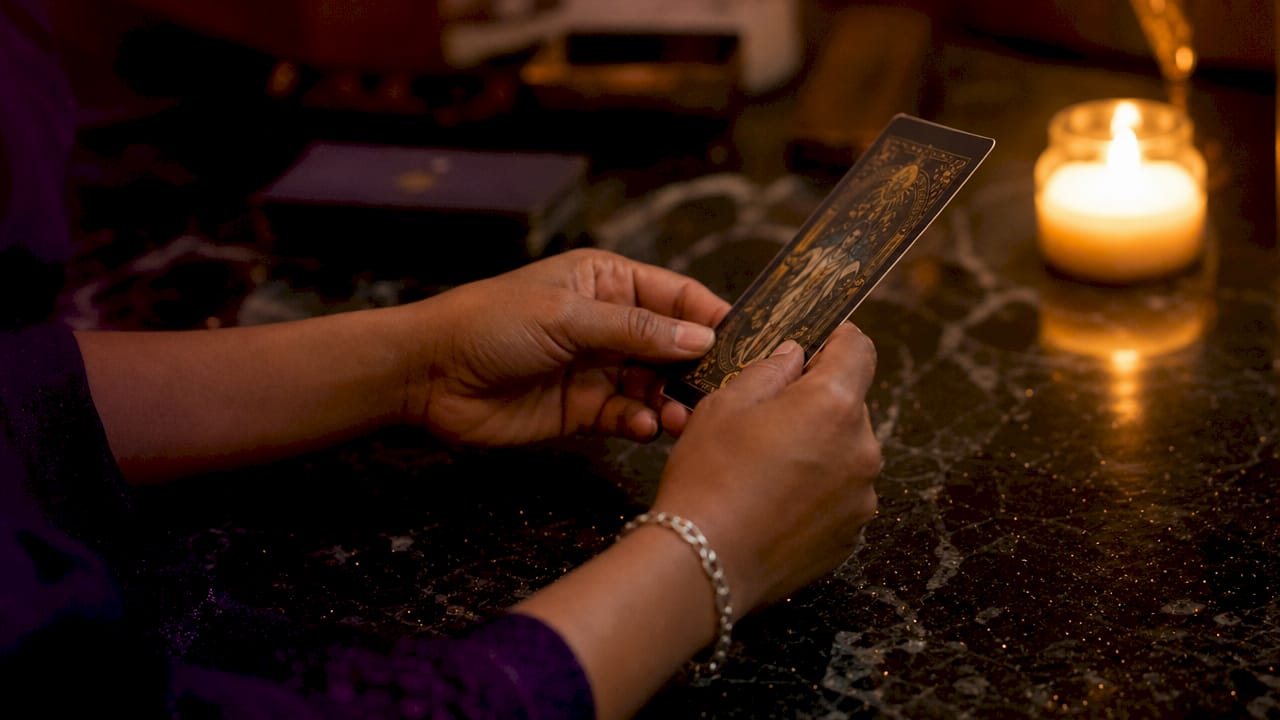
Tarot helps uncover emotional conflicts like fear versus desire or logic versus intuition, which are often the actual cause of indecision. Naming those conflicts is the first step toward resolving them. Without a tool that forces you to confront them, most people cycle through the same mental loops indefinitely.
Key emotional patterns tarot commonly surfaces:
- Fear of loss disguised as practical caution
- Desire for change blocked by comfort-seeking behavior
- Loyalty to others overriding personal values
- Unacknowledged grief or excitement about an outcome
- Shadow work patterns that repeat across multiple life areas
Tarot also supports self-distancing, a technique studied by researchers Kross and Ayduk in 2011 and 2017. Adopting a third-person perspective during a reading reduces emotional reactivity. That reduction directly improves your capacity to make clear, values-aligned choices.
2. The structured tarot decision-making process
Using tarot well requires structure. A vague question produces a vague reading. Mushy questioning leads to decision paralysis, not clarity.
The most effective approach treats a tarot session as a structured experiment. Before pulling any cards, write down two things: the decision you face in one sentence, and why it feels difficult in one sentence. This single step eliminates the majority of unfocused readings.
Here is a practical process for a decision-focused session:
- Define the decision. Write it in one clear sentence. "Should I accept the job offer in Denver?" is specific. "What should I do with my life?" is not.
- Name the difficulty. Write one sentence explaining what makes this hard. Fear of failure, conflicting loyalties, and financial uncertainty are all valid starting points.
- Choose a spread. The Two Options spread and the 5-Card Decision Making spread are both well-suited to life choices. Three to five cards balance depth with clarity.
- Pull cards once. One reading per question is the standard. Repeating the pull hoping for a different result undermines the process entirely.
- Interpret, do not predict. Read each card position as a reflection of your current state, not a forecast of what will happen.
- Journal your response. Write what each card brought up emotionally, not just intellectually.
- Define a next step. The session ends with one concrete action you will take based on the insight.
Tarot readings typically last 15–30 minutes with 3–5 card spreads and journaling. That time frame is enough for genuine depth without creating overwhelm.
Pro Tip: Before your reading, place your written decision statement face-up next to the cards. Keeping it visible prevents you from drifting into general life reflection and keeps the session focused on the actual choice.
3. How tarot breaks analysis paralysis through productive constraint
Analysis paralysis happens when options feel infinite and stakes feel high. The mind stalls because no single path feels certain enough to commit to. Tarot solves this by doing something counterintuitive. It limits your frame of reference.
Expert Alan Jones describes this as productive constraint. Instead of facing an open ocean of possibilities, you face a navigable inlet. The cards define a bounded space for thought. That boundary is not a limitation. It is a relief.
"Tarot's symbolic constraint frees the user from limitless options, enhancing the focus and self-reflection necessary for better decision processes." — Alan Jones
This constraint also reduces emotional reactivity. When you are not scanning an endless list of options, your nervous system settles. Clearer thinking follows. The cards do not make the decision for you. They create the conditions where you can make it yourself.
Tarot also functions as a divine interruption to confirmation bias. Most people in analysis paralysis are not actually weighing options equally. They are seeking permission for a choice they have already made, or avoiding a choice they fear. A card that contradicts your expected narrative forces you to examine that bias directly. That interruption is where the real value lives.
The intuition you access during a reading is not mystical. It is the result of your mind being given a structured prompt and enough quiet to respond honestly.
4. Common pitfalls that reduce tarot's effectiveness
Tarot works when used correctly. Several common mistakes consistently reduce its value.
- Vague questions. Failure to define the decision clearly leads to 80–90% of ineffective self-readings. Specificity is not optional.
- Repeated pulls. Pulling cards multiple times on the same question creates what practitioners call paralysis wearing a costume. It looks like seeking clarity but functions as avoidance.
- Treating cards as commands. Tarot cards act as a supportive colleague, not an authority. The cards reflect possibilities. You retain full agency over the outcome.
- Skipping the action step. Insight without follow-up falls back into anxiety or entertainment. The post-reading action step is what converts reflection into decision.
- Using tarot in isolation. Tarot works best alongside other inputs. Combine it with journaling, conversation with a trusted person, or practical research on your options.
Pro Tip: If you feel the urge to pull cards a second time on the same question, write down what outcome you were hoping to see. That answer usually reveals more than any additional card pull would.
The goal of using tarot for life choices is not to outsource the decision. It is to access information about yourself that you were not consciously holding. Once you have that information, the decision belongs entirely to you.
5. How tarot supports personal growth beyond single decisions
The benefits of tarot readings extend past any individual choice. Regular reflective practice builds a skill that transfers across every area of life: the ability to recognize your own emotional patterns before they drive behavior unconsciously.
Personal growth through tarot happens incrementally. Each session adds a data point about how you respond to uncertainty, what values you consistently prioritize, and where fear tends to distort your thinking. Over time, that self-knowledge becomes a reliable internal resource.
The Judgement card is a strong example of this dynamic. It represents decisive self-assessment and a call to act on what you already know. Encountering it repeatedly in readings about the same life area is a signal worth taking seriously. It points to a pattern, not a single moment.
Tarot also builds tolerance for ambiguity. Decision making with tarot teaches you to act without certainty, which is the actual condition of every real-world choice. That tolerance is a practical skill, not a spiritual one.
Key takeaways
Tarot supports better decisions by externalizing hidden emotions, creating structured focus, and converting reflection into concrete action.
| Point | Details |
|---|---|
| Define before you draw | Write your decision and its difficulty in one sentence each before pulling any cards. |
| One reading per question | Repeating pulls on the same question creates avoidance, not clarity. |
| Constraint aids focus | Limiting options through a spread reduces emotional reactivity and sharpens thinking. |
| Action step is required | Every session must end with one concrete next step or the insight loses its value. |
| Tarot builds self-knowledge | Regular practice reveals emotional patterns that improve all future decisions, not just the current one. |
Why I think most people use tarot backwards
Most people come to tarot hoping it will tell them what to do. That is the wrong frame, and it is why so many readings feel unsatisfying or confusing.
The cards do not know your life better than you do. What they do is give your subconscious a structured prompt to respond to. The insight comes from you. The card is just the question.
I have seen this play out clearly when someone pulls a card they dislike and immediately wants to reshuffle. That reaction is the reading. The resistance to a particular card tells you exactly where the emotional block is sitting. Ignoring it and pulling again is the equivalent of closing a browser tab you do not want to read.
The most useful readings I have encountered are the ones where the person says, "I did not expect that, but it makes complete sense." That gap between expectation and recognition is where tarot earns its value. It is not magic. It is structured self-honesty with a visual prompt.
Approach tarot as a collaborative tool for clarity, not an external authority. Keep your agency. Use the cards to see yourself more clearly, then make the call yourself. That combination is where the real confidence comes from.
— Joseph
Tarosyn's tools for deeper tarot practice
Tarosyn brings together AI-powered tarot, astrology, and numerology in one place, making it easier to build a consistent reflective practice around your decisions.
The tarot archetypes library on Tarosyn gives you detailed context for every major figure in the deck, which directly improves how you interpret cards during decision-focused sessions. Understanding what the Seeker or the Shadow archetype represents changes how you read a spread. You can also browse public community readings to see how others interpret cards in real decision contexts. That exposure builds interpretive range faster than solo practice alone. Start with the archetypes library and use it alongside your next reading session.
FAQ
What is the main benefit of using tarot for decisions?
Tarot surfaces hidden emotions and unconscious conflicts that block clear thinking. It creates structured focus that reduces analysis paralysis and helps you act with greater self-awareness.
How many cards should I use in a decision-making spread?
Three to five cards is the recommended range. This balance provides enough depth for genuine insight without producing interpretations that are too broad to be useful.
Can I repeat a tarot reading if I do not like the result?
Repeating a reading on the same question is counterproductive. Practitioners identify this pattern as paralysis in disguise. One well-structured reading with journaling is more effective than multiple pulls.
Does tarot replace professional advice or personal responsibility?
Tarot does not replace professional guidance, and it does not make decisions for you. It functions as a reflective tool that informs your thinking. The decision and its consequences remain entirely yours.
What does the Judgement card mean in a decision context?
The Judgement card represents a call to self-assess and act decisively on what you already know. It signals that the information needed for a choice is already available and that further delay is avoidance.