
An astrological archetype is defined as a symbolic pattern linked to a planet that represents a core psychological drive shared by all humans. These patterns are not causes of behavior. They are reflections of it, drawn from the intersection of mythology, depth psychology, and celestial symbolism. Carl Jung's concept of archetypes as universal unconscious structures gave modern astrology its psychological backbone. Each planet in your birth chart acts as a dynamic inner figure with its own agenda, its own voice, and its own way of pushing you toward growth. Understanding these figures is the foundation of archetypal astrology, a developmental model aimed at psychological wholeness rather than rigid fortune-telling.
What is an astrological archetype, and why does it matter?
Astrological archetypes are symbolic psychological patterns that reflect meaningful coincidences between planetary positions and the activation of inner drives. They do not cause your personality. They mirror it. This distinction separates archetypal astrology from fatalistic prediction and places it firmly in the territory of self-understanding.
The term "archetype" comes from the Greek arche (original) and typos (pattern). Jung borrowed it to describe primordial images stored in the collective unconscious. Astrologers applied the same logic to planets: each planet embodies a universal human function that every person carries internally, expressed in their own unique way.
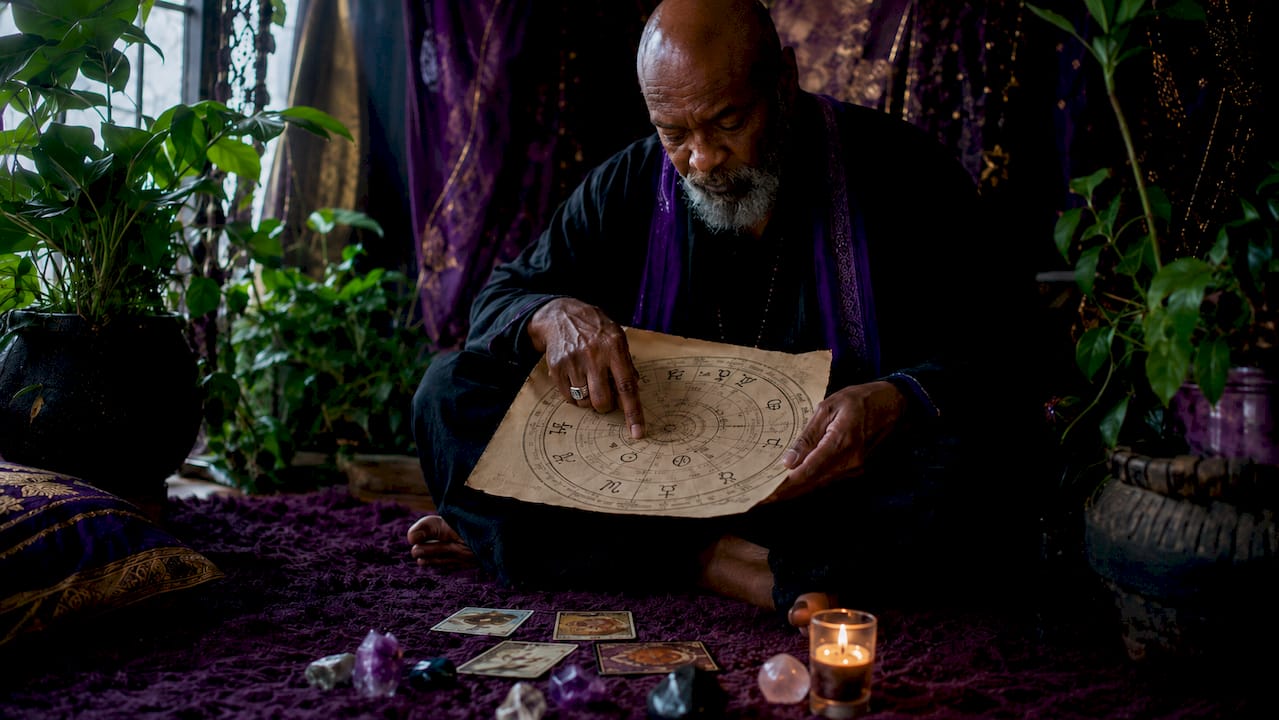
What makes this framework useful is its specificity. Generic personality typing systems assign you a fixed category. Archetypal astrology gives you ten distinct inner figures, each operating in a different area of life, each capable of expressing across a wide spectrum from constructive to destructive. The astrological archetype meaning, then, is not a label. It is a living description of forces at work inside you.
What are the core planetary archetypes and what do they represent?
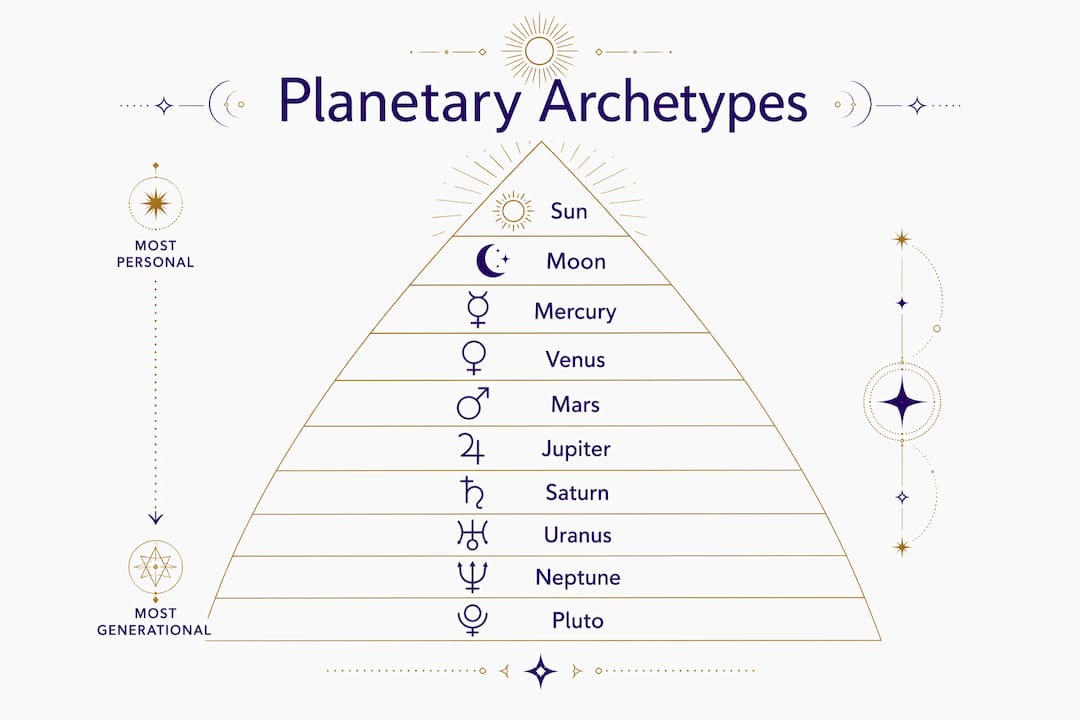
Ten planetary archetypes form the standard framework in modern psychological astrology. Each planet represents a core function within the psyche, acting as a dynamic inner figure with its own agenda and mode of expression.
The luminaries:
- Sun (The Hero/Self): The Sun represents ego, identity, and the quest for self-actualization. It shows where you must grow and shine uniquely. A well-integrated Sun archetype produces confidence and purpose. A suppressed one produces arrogance or chronic self-doubt.
- Moon (The Inner Child/Mother): The Moon governs emotional memory, instinct, and the need for security. It reflects your earliest conditioning and how you seek comfort.
The personal planets:
- Mercury (The Messenger): Mercury rules cognition, communication, and the way you process and share information.
- Venus (The Lover): Venus governs values, beauty, and relational bonds. The Lover archetype shapes what you find attractive and what you prioritize in relationships.
- Mars (The Warrior): Mars drives assertion, desire, and physical energy. The Warrior archetype determines how you pursue what you want and how you handle conflict.
The social planets:
- Jupiter (The Sage): Jupiter expands, philosophizes, and seeks meaning. The Sage archetype pushes toward wisdom, generosity, and belief systems.
- Saturn (The Taskmaster): Saturn disciplines, limits, and demands accountability. It is the archetype most associated with both mastery and restriction.
The outer planets (generational archetypes):
- Uranus (The Revolutionary): Uranus disrupts, innovates, and breaks old structures.
- Neptune (The Mystic): Neptune dissolves boundaries, inspires spiritual longing, and governs illusion.
- Pluto (The Transformer): Pluto rules death, rebirth, and deep psychological change.
Each archetype expresses across a broad spectrum. Saturn, for example, can manifest as disciplined mastery or as crushing self-restriction. Understanding this range prevents deterministic readings and opens space for conscious navigation.
Pro Tip: When you study your birth chart, read each planet as a character with a full personality, not just a keyword. Ask what that character wants, how it behaves under stress, and how it relates to the other characters in the chart.
How do astrological archetypes function together within a birth chart?
A birth chart is not a list of isolated traits. It is a community of archetypal figures that interact, conflict, and negotiate with each other constantly. Understanding how they work together is where astrological archetype meaning becomes genuinely practical.
The clearest framework for understanding this interaction uses three grammatical roles:
- Planets are verbs. They describe what is happening, the action or function. Mars asserts. Venus attracts. Saturn restricts.
- Signs are adjectives. They describe how the planet acts. Mars in Libra asserts diplomatically. Mars in Aries asserts directly and aggressively.
- Houses are nouns. They show where the action takes place, the life domain. Mars in the 7th house asserts itself primarily in partnerships.
This three-part grammar transforms astrology into a psychological map that is far more nuanced than sun-sign columns. A single planet placement carries the combined meaning of its function, its style, and its arena.
The ego plays a specific role in this system. The ego does not control the archetypes. It mediates among them. When your Sun archetype wants recognition and your Saturn archetype demands restraint, the ego negotiates. When your Moon craves security and your Uranus demands freedom, the tension between them is real and felt. Psychological astrology calls this inner conflict the natural state of a complex psyche.
- Integration is the goal. Practitioners emphasize what is called psychological polytheism: honoring conflicting archetypes within rather than forcing false harmony. A dynamic balance of inner figures produces wholeness. Suppressing one archetype to satisfy another produces symptoms, compulsions, or blind spots.
Pro Tip: When you feel internally torn between two impulses, identify which planets those impulses belong to. Naming the archetypes in conflict gives you distance from the tension and more room to choose consciously.
What are examples of astrological archetypes in everyday personality and behavior?
Concrete examples make the abstract framework real. Here is how the major archetypes show up in daily life, relationships, and decision-making.
Sun archetype in practice: A person with a strongly placed Sun in Leo pursues visibility, creative expression, and recognition. The constructive side is genuine warmth and leadership. The shadow side is ego inflation and a need for constant validation. The Sun archetype drives the central question of identity: who am I, and am I living that out?
Moon archetype in practice: A person with Moon in Cancer prioritizes emotional safety, family bonds, and nurturing. Their decisions are often guided by gut feeling rather than logic. The shadow side of this archetype is emotional withdrawal or excessive dependency on others for a sense of security.
Mars and Venus in relationships: Venus shapes what you value in a partner and how you express affection. Mars shapes how you pursue that partner and how you handle disagreement. When these two archetypes are in tension in a chart, the person may simultaneously crave closeness and push people away. This is not a character flaw. It is an archetypal conflict requiring conscious attention.
"Archetypes are not fixed destinies. They are potentials. The same Mars archetype that produces a bully can produce a surgeon, an athlete, or a tireless advocate. The expression depends on awareness, context, and choice." — Archetypal Astrology tradition
Saturn's dual nature is the clearest example of archetypal multivalence. Saturn as discipline produces the person who masters a craft through years of focused effort. Saturn as restriction produces the person who never starts because failure feels too threatening. Both are the same archetype. The difference is the level of conscious engagement with it.
The outer planets operate differently. Uranus, Neptune, and Pluto carry generational influence because they move slowly and entire generations share the same sign placement. Their personal expression shows up through house placement and aspects to personal planets. A person with Pluto conjunct their Sun experiences the Transformer archetype as a deeply personal force shaping identity. Someone with Pluto in a less prominent position feels it more as a background generational theme.
The shadow aspects of any archetype become most visible under stress. When you react in ways that surprise you, an unintegrated archetype is usually driving. Recognizing the pattern is the first step toward working with it rather than being controlled by it.
How do different astrological traditions interpret archetypes?
Traditional and modern astrology approach planetary archetypes from meaningfully different angles. Understanding both enriches your reading of any chart.
| Perspective | Focus | View of archetypes |
|---|---|---|
| Traditional astrology | Seven classical planets, visible to the naked eye | Planets as external cosmic forces with specific dignities and conditions |
| Modern psychological astrology | All ten planets including outer planets | Planets as internal psychological drives and autonomous inner figures |
| Archetypal astrology | Synchronicity between planetary cycles and lived experience | Archetypes as symbolic languages bridging psyche, myth, and reality |
The debate at the center of this field is whether archetypes are psychological projections or something more. Some practitioners treat them as symbols the mind uses to organize experience. Others treat them as living intelligences with genuine ontological reality, what older traditions called "inner gods." Neither view is provably correct. Both produce useful interpretations.
Modern archetypal astrology holds that respecting the seven traditional planets as the original framework matters, even as the outer planets add depth. The traditional planets describe the personal psyche. The outer planets describe collective and transpersonal forces that break through individual life in dramatic ways. Integrating both views produces a richer, less reductive reading.
Key Takeaways
Astrological archetypes are multivalent symbolic patterns linked to planets that function as autonomous inner drives, requiring conscious engagement rather than fixed interpretation.
| Point | Details |
|---|---|
| Archetypes reflect, not cause | Planetary archetypes mirror psychological drives; they do not determine your fate or personality. |
| Ten core archetypes | Sun through Pluto each represent a distinct psychological function, from ego to transformation. |
| Chart as inner community | Planets, signs, and houses work together as a grammar describing who acts, how, and where. |
| Shadow sides are real | Every archetype has a constructive and a destructive range; awareness is what shifts the expression. |
| Tradition and modern views both matter | Classical and psychological astrology each add depth; neither alone gives the full picture. |
Why I think most people misread their own archetypes
Most people approach their birth chart looking for confirmation of who they already think they are. They find their Sun sign, read the flattering parts, and stop there. That approach misses the point entirely.
The archetypes that shape your life most powerfully are often the ones you least identify with. A person who prides themselves on rationality usually has a very active Moon or Neptune archetype running quietly in the background, driving emotional decisions they later rationalize. A person who claims they never get angry often has Mars in a suppressed or redirected position that leaks out as passive resistance or chronic resentment.
What I have found genuinely useful is treating each planet as a character you have to negotiate with, not a trait you either have or do not have. Saturn is not your enemy. It is the part of you that knows the cost of shortcuts. Uranus is not chaos. It is the part of you that refuses to stay in a life that no longer fits.
The most honest use of archetypal astrology is not prediction. It is recognition. When you see a pattern in your behavior and can name the archetype behind it, you gain a small but real degree of freedom from it. That is the practical value of this system, and it is enough.
— Joseph
Tarosyn's archetype resources for deeper self-understanding
Tarosyn connects astrological and tarot archetypes in one place, so you can see how these symbolic patterns show up across both systems.
The tarot archetypes library on Tarosyn maps each major archetype with clear descriptions, symbolic meanings, and connections to planetary energies. If you want to see how a specific figure like The Magician or The Sage relates to your own chart, the Magician archetype page is a direct starting point. Tarosyn also offers public tarot readings from the community, where archetypal themes come through in real interpretations you can read and reflect on. Use these resources to move from abstract understanding to personal insight.
FAQ
What is the astrological archetype meaning in simple terms?
An astrological archetype is a symbolic pattern linked to a planet that describes a core human drive, such as identity, emotion, or ambition. It reflects psychological tendencies rather than fixed outcomes.
How many astrological archetypes are there?
Modern archetypal astrology recognizes ten planetary archetypes, from the Sun through Pluto, each representing a distinct psychological function within the birth chart.
How do astrological archetypes work in a birth chart?
Planets act as functions, signs describe how those functions express, and houses show which life area they operate in. Together, they form a psychological map of your inner drives and their real-world arenas.
What are astrological symbols and how do they relate to archetypes?
Astrological symbols are the glyphs assigned to planets, signs, and other chart points. Each symbol is a visual shorthand for the archetype it represents, carrying layers of mythological and psychological meaning.
Can an archetype change over time?
The archetype itself does not change, but your relationship to it can. Conscious engagement with a challenging archetype like Saturn or Pluto shifts how its energy expresses in your life, from reactive to intentional.