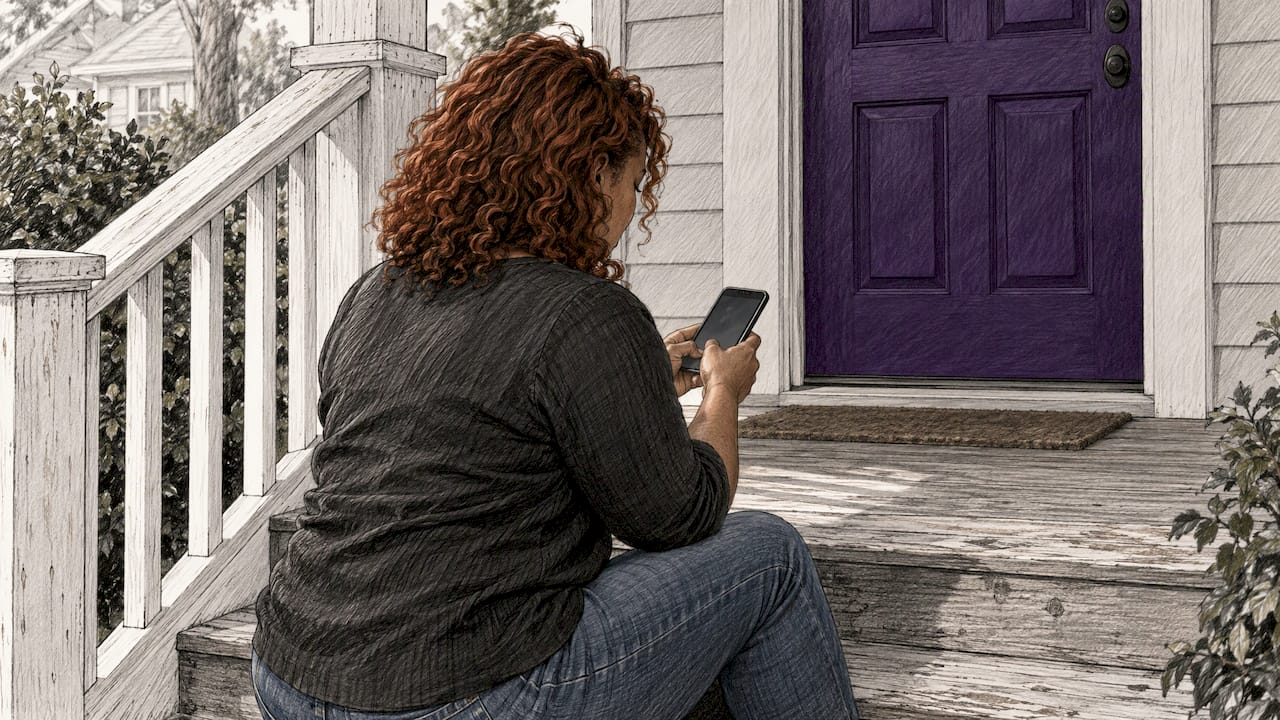
Anonymous spiritual posting means sharing a prayer, a tarot pull, a chart reflection or a personal confession without your name attached. It works well when you set your own limits first: decide what you share, who can see it and what you keep in a private space. Start with a private practice, then share outward in a way you control. Tarosyn is built around that order: readings and journaling are personal first, and sharing is a choice.
TL;DR
- Anonymous does not mean untraceable. Platforms collect data, and details in your words can identify you.
- Share the feeling, the question or the lesson. Leave out names, places, dates and workplaces.
- Write in a private journal first. Post only what you would accept being read by someone who knows you.
- Use small, moderated, private groups when you want responses. Use public anonymous boards only for short, low-risk posts.
- Read the privacy settings and the report tools before you post.
Table of Contents
- What anonymous spiritual posting is
- What you can share
- Anonymous is not the same as untraceable
- A short checklist before you post
- Share spiritual messages without causing harm
- Where to share, by type
- Write first in private, then decide
- How Tarosyn fits this routine
- Our perspective
- Safety notes for sensitive posts
- FAQ
- Sources
What anonymous spiritual posting is
Anonymous spiritual posting is sharing something about your inner life without showing who you are. The post can be a confession, a prayer request, a dream, a card you pulled, a hard moment in your practice or a question about your chart.
People do it for plain reasons:
- The topic feels private, such as grief, doubt or a family conflict.
- Friends or relatives do not share your beliefs.
- You are new to a practice and do not want to look like a beginner.
- You want honest replies from people who are not tied to your social circle.
Anonymous sharing apps and boards usually take one of three forms:
- A public board. Anyone can read the post. You write, pick a category and submit.
- A personal message link. You share a link, and other people send you messages without revealing who they are. Nothing is posted publicly.
- A private group or circle. Members are known to the group host, and posts are visible only inside the group, sometimes with names hidden.
Each form gives a different level of privacy and a different kind of reply. Choose the form before you write the post.
What you can share
Spiritual posts fall into a few clear types. Pick the type that fits what you need.
Reflections. A short note on what a practice taught you this week. Example: "I pulled the Hermit three days in a row and noticed I was avoiding quiet time." This is easy to share and low risk.
Questions. Ask how others read a card, a transit or a number. Example: "How do you read the Tower when nothing bad has happened?"
Confessions. Write about doubt, guilt or a habit you want to change. These are the posts that most need anonymity, and the ones where small details matter most.
Prayer or intention requests. Ask a group to hold a thought for you. Keep it general. "A hard week ahead" is enough.
Rituals and routines. Share a morning pull, a moon-phase journal prompt or a breathing routine. These help other people and expose very little about you.
What to leave out in every type:
- Full names, usernames from other sites and social handles
- Your city, school, workplace or place of worship
- Exact dates and times of events that others could match to you
- Photos with metadata or recognizable backgrounds
- Birth data, if you do not want your chart traced to you (more on this below)
Anonymous is not the same as untraceable
The word "anonymous" describes what other users see. It does not describe what the platform stores or what your words give away.
Carnegie Mellon University's guidance on online harassment states that anonymous posts still have real impact and that anonymity does not mean freedom from consequences. It also notes that platforms collect data and may cooperate with law enforcement. For a spiritual post, the likely risks are smaller: a coworker recognizes your story, a family member spots your phrasing, or a comment thread turns unkind. The principle is the same. Write as if someone who knows you might read it.
RAINN, the US anti-sexual-violence organization, advises people to pause before posting, because deleted content can persist through screenshots or server backups. It also recommends personalizing privacy settings and turning off geolocation. Both points apply to anonymous posts. A deleted post may not be gone.

Three ways your post can identify you
Your details. In a small group, a rare job, a specific event or a particular turn of phrase can be enough. Change or remove details that only you would know.
Your timing. If you post right after something happened in your group of friends, people can guess. Wait a few days.
Your account. Some apps let you post anonymously to other members while the app still links the post to your account. Others hide it from everyone. Read the privacy settings and the help page to see which one you are using, and whether you can hide your own past anonymous posts from your profile.

A short checklist before you post
Run through these seven questions. They take under two minutes.
- Does the post contain a name, place, date or handle? Remove it.
- Would the post still make sense with the details blurred? If yes, blur them.
- Do I know who can read this: everyone, members only, or a small circle?
- Can I delete or edit it later? Does the app say what deleting does?
- Is there a report button, and does it protect the reporter's identity?
- Do the community rules say what is not allowed, such as medical advice or threats?
- Am I okay with this being screenshotted?
If the answer to the last question is no, keep the thought in a private journal instead.
Share spiritual messages without causing harm
Anonymous spaces make it easy to say things you would not say with your name attached. In spiritual spaces that has a specific risk: confident advice from a stranger can sound like authority.
Follow these rules when you reply to other people's posts.
- Offer a view, not a verdict. Say "When I pull this card, I read it as..." instead of "This means you must..."
- Stay out of health, money and legal decisions. A reading is a prompt for reflection. If someone describes a medical problem, a crisis or a legal issue, encourage them to talk to a doctor, a counselor or the right professional. If someone describes a risk to their safety, point them to emergency services or a crisis line.
- Do not predict harm. Avoid statements like "someone close to you will betray you." They scare people and cannot be checked.
- Respect other paths. Do not argue about whose tradition is correct. Ask questions instead.
- Do not amplify cruelty. Carnegie Mellon's guidance says bystanders should document and report harmful posts rather than amplify them, using screenshots, timestamps and the in-app report, block and mute tools.
If you run a group or a board, write the rules on one page. Cover what is welcome, what is not, and how to report a post. Short rules that members can read in a minute get followed more often than long ones.
Where to share, by type
The right place depends on how much you want to reveal and what kind of reply you want.
| Place | Who sees it | Best for | Main risk |
|---|---|---|---|
| Public anonymous board | Anyone | Short reflections, general questions | Details can identify you; replies can be unkind |
| Anonymous message link | Only you see the messages | Collecting honest feedback from friends or followers | You cannot control who sends what |
| Private group | Members only | Deeper confessions, long threads | The group host and members still matter |
| Personal journal in an app | Only you | Drafts, dreams, readings you are not ready to share | None to others; keep your device secured |
If you want a small, known audience, a private group is the better start. Our guides on how to find and join a private spiritual group and on checking chart privacy before joining a private astrology group walk through what to ask before you join.
Posting about your birth chart
Your birth date, time and place can point to one person. A chart posted in full is close to a fingerprint in a small community. If you want advice on a placement, share only that placement, for example "Moon in Scorpio in the 8th house", and leave out the birth data. For tarot, share the card names and your question, not the people in it.
Posting a mantra or a prayer
Short texts such as mantras and intentions are safe to share because they carry no personal data. If you want to read more on how different mantras are used for different states of mind, this piece on mantras for specific inner conditions is a good starting point before you post your own.
Write first in private, then decide
Most people post too fast. A private draft solves that. Write the full version in a journal. Read it the next day. Then cut it down to the part you want to share.
A simple routine:
- Pull a card, read your daily chart note or write one line of what you feel.
- Write for five minutes without editing.
- Mark the lines that include names, places or dates.
- Rewrite those lines in general terms.
- Wait one day.
- Decide: keep it private, share with a trusted circle, or post.
This keeps your practice yours. It also gives you better posts, because you share a clear thought rather than raw emotion.
How Tarosyn fits this routine
Tarosyn is an AI-powered spiritual app that brings tarot, astrology, numerology, journaling and a social community into one place. You can save readings, write journal entries and track your spiritual growth over time. That makes it easy to follow the routine above: read, write, review, then decide what to share.
Our readings are designed to remember your history and use your birth chart context, so the reflection you take away is personal to you. Our approach is built around privacy by design and flexible ways to connect, so you can keep your practice personal or share it with friends and the community. Dedicated tools for friend circles and content sharing let you choose a smaller audience over a public one.
Plans
Tarosyn is freemium, with a free trial period before a paid subscription. The Mystic monthly plan is $7.99 per month. The Annual circle plan is $59.99 per year. Luna packs are also available.
Start with a reading and a journal entry, then decide what to share. You can see the plans on the Tarosyn site.

Our perspective
We believe a spiritual practice starts in private. Before a card, a chart or a number becomes a post, it is a question you are asking yourself, and that question deserves a calm place to be answered.
That is why we build readings that remember your history and your birth chart context, and why we pair them with journaling. A reading you can save and revisit teaches you more than one you read once and forget. It also gives you something to look back on before you decide what to share.
We design for guidance that is reflective and emotionally intelligent, not generic and not predictive. When a reading does not tell you what will happen to you, you have less reason to post it in fear and more reason to post it with curiosity.
Sharing is the second step. Some people want to keep their practice to themselves. Others want a friend circle or a community. We build for both, with privacy as the starting point and connection as the option.
Joseph Calitoy
Safety notes for sensitive posts
Some posts carry more weight than others. Handle them with extra care.
- If you are in distress. Do not rely on an anonymous board for support. In the US, you can call or text 988, the Suicide and Crisis Lifeline, at any time. If you are in immediate danger, call 911.
- If you are being harassed. Keep screenshots with timestamps and context, then use the report, block and mute tools. RAINN reports that a 2020 Pew survey found 41% of American adults had experienced online harassment, so you are not alone, and the tools exist for this.
- If a post names another person. Remove the name. A spiritual post about someone else can hurt them even when it is anonymous.
- If you are under 18. Many anonymous boards require users to be 18 or older. Check the terms before you post.
FAQ
Is anonymous spiritual posting really anonymous?
Other users may not see your name, but the platform can still hold account and technical data. Your wording and details can also give you away in a small group. Treat anonymous as private from most readers, not invisible to everyone.
What should I avoid sharing in an anonymous post?
Avoid names, social handles, your city, your workplace, exact dates and your full birth data. Share the feeling or the question instead. A good test is whether someone who knows you could match the post to you in one guess.
Can I share a tarot reading or horoscope without revealing who I am?
Yes. Post the card names, your question and what you took from it. Leave out the people involved and any identifying details. If you want to keep the full reading, save it in a private journal and share a short version.
How do I give feedback on someone's anonymous post?
Offer your own view in your own words, ask a question, and avoid predictions or orders. If the post mentions a health problem or a crisis, encourage the person to speak with a doctor, counselor or crisis line. If a post is harmful, report it instead of replying.
Is a private group safer than a public anonymous board?
A private group limits who can read your post, which lowers the chance of a stranger finding it. It also means the people reading are a defined group, so choose one with clear rules and a host you trust.
Sources
- Guidance on Social Media Online Harassment, Carnegie Mellon University
- Stay Safer on Social Media, RAINN