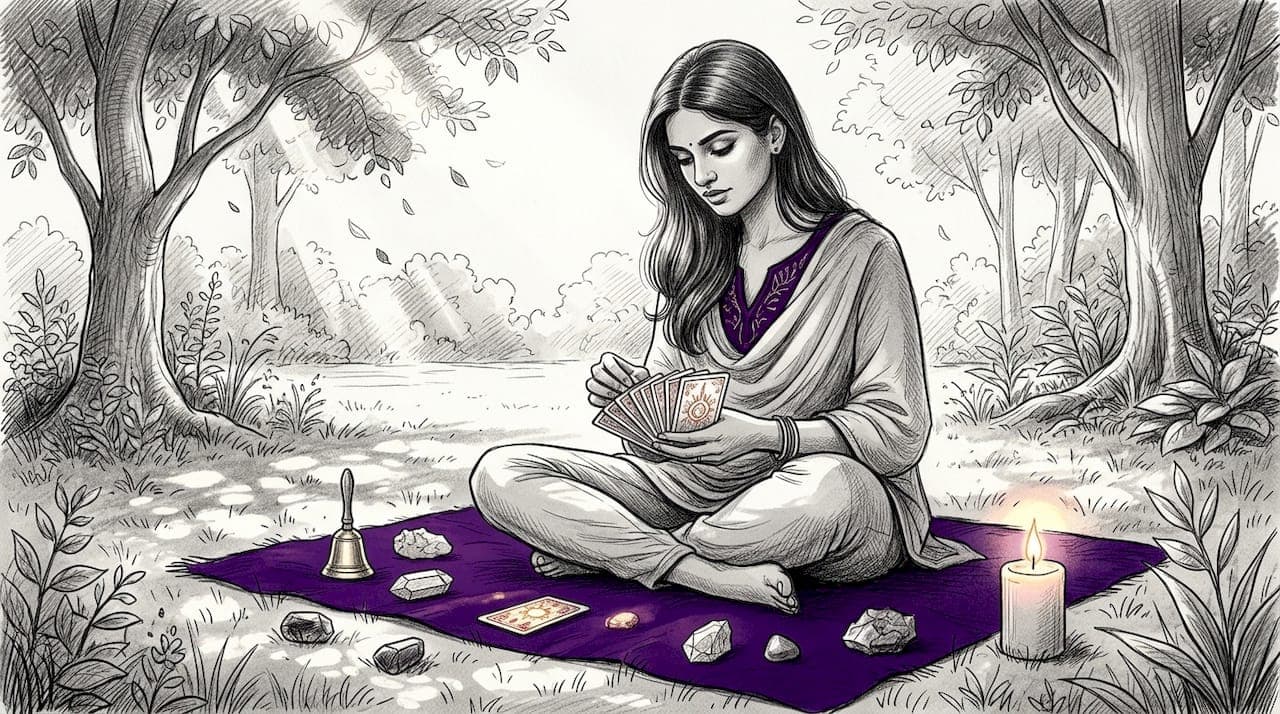
Tarot and yoga connection explained simply: these two practices form a complete system for self-inquiry, combining the body awareness of yoga with the symbolic reflection of tarot to build intuition and personal clarity. Both tools share the same core goal. They calm the mind, surface buried awareness, and support honest self-examination without forcing conclusions. Yoga aligns the body and clears mental noise. Tarot then gives that cleared mind a mirror, using archetypal symbols from the Major and Minor Arcana to reflect what the subconscious already knows. Together, they create a practice that is greater than either one alone, and personal growth through tarot becomes a lived experience rather than an abstract idea.
How does the tarot and yoga connection work symbolically?
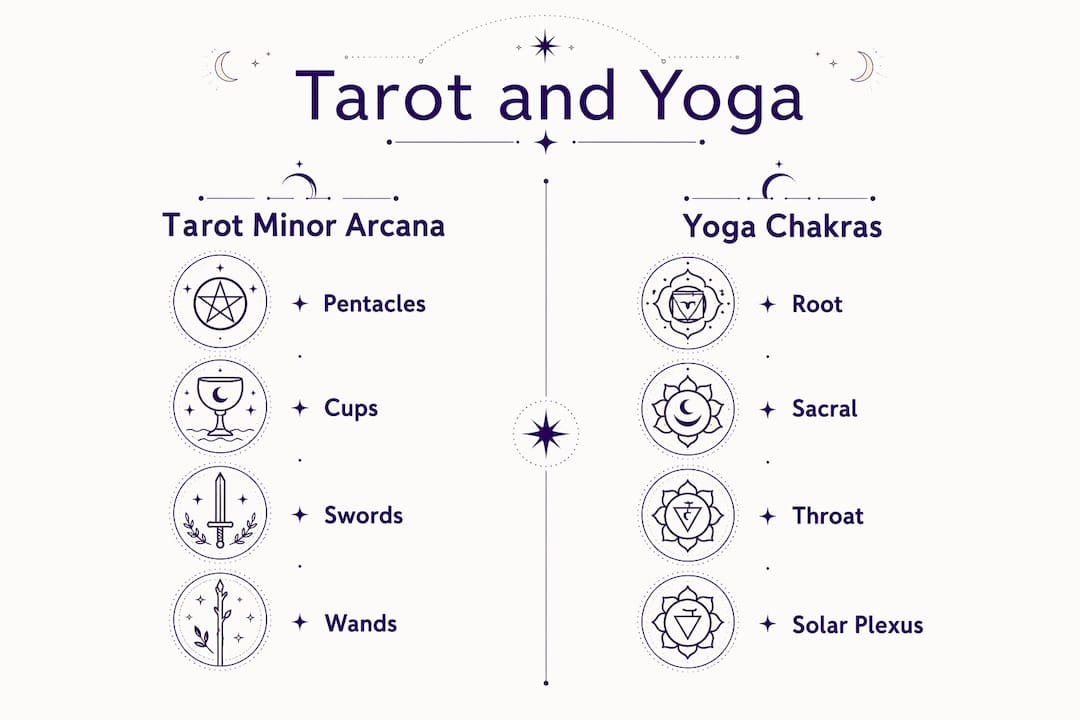
The tarot and yoga connection runs deeper than shared spiritual vocabulary. The four suits of the Minor Arcana map directly onto elemental energies that yoga philosophy also recognizes through the chakra system. Elemental chakra mapping moves the practice well beyond fortune-telling into genuine energetic work. This gives practitioners a concrete framework for identifying where energy is blocked and which yoga poses or breathwork can address it.
The table below shows the core correspondences:
| Tarot Suit | Element | Primary Chakra | Yoga Focus |
|---|---|---|---|
| Pentacles | Earth | Root (Muladhara) | Grounding poses, standing sequences |
| Cups | Water | Sacral (Svadhisthana) | Hip openers, flow sequences |
| Wands | Fire | Solar Plexus (Manipura) | Core work, breath of fire |
| Swords | Air | Heart/Throat (Anahata/Vishuddha) | Chest openers, pranayama |
The Major Arcana operates at a different level. Cards like The High Priestess, The Emperor, and The World correspond with upper chakras and planetary archetypes, pointing toward themes of consciousness, authority, and integration. When a practitioner draws The High Priestess before a session, it signals inward listening rather than outward action, which translates directly into a slower, more meditative yoga practice. This symbolic alignment gives yoga practitioners a specific direction for each session rather than a generic flow.
How do tarot and yoga complement each other during intention setting?
Yoga offers somatic alignment and mental clearing. Tarot provides archetypal symbols that mirror the subconscious, and together they foster a curious attitude that lets insight arise without pressure. This is the practical heart of yoga and tarot synergy: yoga prepares the body and mind, and tarot gives that prepared state a question to sit with.
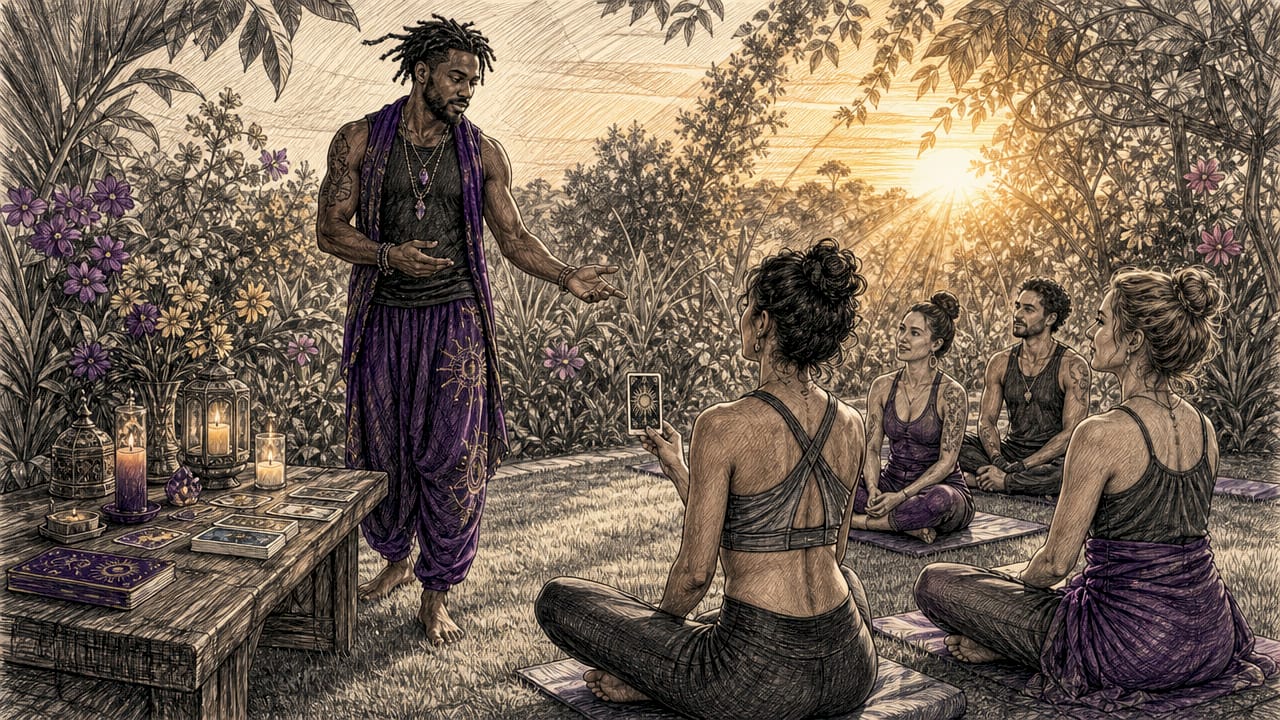
The most structured method for tarot for setting yoga intentions uses the New Moon phase. A three-card New Moon pull covers three positions: current situation, intention, and one concrete physical step. The physical step card is particularly useful for yoga practitioners because it points toward a specific energetic area to address through movement. Monthly reassessment keeps the practice grounded in real progress rather than wishful thinking.
A typical integrated session follows this sequence:
- Begin with 20–30 minutes of yoga to settle the nervous system and release physical tension.
- Draw one to three tarot cards with a specific question in mind, such as "What does my body need right now?"
- Sit quietly with the cards for five minutes before journaling any immediate impressions.
- Return to the mat for a short yoga sequence guided by the card's elemental suit or archetype.
- Close with a rest pose to let the combined insight settle before re-engaging with daily life.
Pro Tip: Write your card's keyword on a sticky note and place it at the top of your mat before you begin moving. Keeping the symbol in your peripheral vision during practice lets your body respond to it without your analytical mind taking over.
Workshop formats confirm this structure works at scale. Yoga and tarot workshops typically run two hours, cost around $35 per session or $190 for a six-class pack, and require only a yoga mat, with a tarot deck and journal recommended. That low barrier makes the combined practice accessible to beginners without any prior tarot knowledge.
What structured programs combine tarot archetypes with yoga modalities?
Advanced practitioners benefit from sequential programs that link tarot archetypes to specific stages of yoga transformation over multiple weeks. Six-week Kundalini yoga and tarot series move participants from activation through to embodiment, matching each week's tarot archetype to a corresponding Kundalini stage. This cumulative structure produces results that a single session cannot replicate.
Key components of these structured programs include:
- Kriyas: Specific Kundalini yoga sequences tied to the energy of the week's tarot card, targeting the corresponding chakra.
- Meditation: Guided sessions that use the card's imagery as a focal point, deepening the connection between symbol and somatic experience.
- Journaling: Structured prompts that track how each week's archetype shows up in daily life, creating a record of cumulative change.
- Recorded sessions: Participants revisit earlier weeks to observe their own development, which reinforces the transformational arc.
- Tarot readings: Weekly draws that assess progress and surface new layers of the archetype being explored.
The six-week format works because tarot archetypes are not single-session concepts. The Fool, for example, carries themes of new beginnings and risk that take weeks of embodied practice to fully integrate. Pairing it with early-stage Kundalini activation gives the body a physical language for what the card describes intellectually.
What are the common pitfalls when combining tarot and yoga?
The most common mistake practitioners make is reading tarot cards too frequently on the same question. Frequent readings on one goal create psychological clutter and confusion rather than clarity. The fix is simple: schedule tarot spreads for manifestation or clarity only at significant transition points, such as New Moons, birthdays, or seasonal shifts.
The second major pitfall is skipping rest. Rest phases like savasana are not optional recovery time. They are the period when tarot insights pulled earlier in the session convert from intellectual understanding into embodied wisdom. Without that pause, the cognitive and emotional information rarely produces lasting change.
Practical guidelines for avoiding these pitfalls:
- Limit tarot pulls on a single topic to once per lunar cycle.
- Always end a combined session with at least five minutes of savasana or seated stillness.
- Keep a dedicated journal for tarot and yoga sessions to track patterns over time rather than re-reading cards for reassurance.
- Treat the cards as prompts for self-inquiry, not as answers that require immediate action.
Pro Tip: If you feel the urge to pull another card on the same question within a week, do a yoga sequence instead. The body often resolves what the mind keeps circling.
Both tarot and yoga calm the nervous system and encourage clarity to surface naturally. Forcing either practice produces the opposite effect. The goal is peaceful awareness, not certainty.
How do you start exploring tarot and yoga as a beginner?
Starting is straightforward. You need three things: a yoga mat, a tarot deck, and a journal. The deck does not need to be elaborate. A standard Rider-Waite-Smith deck works well because its imagery is clear and widely documented, making it easy to look up card meanings during early sessions.
Beginner-friendly steps to get started:
- Choose a simple spread. A three-card pull covering past, present, and future (or situation, action, outcome) gives enough structure without overwhelming a new practitioner.
- Set one intention before your yoga session. Draw a single card and ask, "What quality do I want to bring into my practice today?" Let the card's suit guide your movement style.
- Attend a workshop. Yoga and tarot workshops typically welcome all levels, keep class sizes small (around eight participants), and provide materials including teas and community connection. The group setting normalizes the practice and removes the pressure of going it alone.
- Practice soft curiosity. The goal is not to decode a message. The goal is to notice what arises when you hold a symbol in your awareness while moving your body.
Using tarot for yoga guidance works best when you treat the cards as conversation starters rather than directives. A card showing the Five of Cups does not tell you what to do. It asks you to notice where grief or loss might be held in your body, and then to move with that awareness. That shift from prediction to inquiry is the foundation of the entire practice. Exploring shadow work through tarot deepens this inquiry further, especially when difficult cards appear.
Key Takeaways
Tarot and yoga work together because yoga clears the body and mind while tarot gives that cleared state a symbolic mirror, producing self-awareness that neither practice achieves alone.
| Point | Details |
|---|---|
| Elemental suit mapping | Each tarot suit corresponds to a chakra, guiding which yoga poses address specific energy blocks. |
| New Moon intention setting | A three-card pull at the New Moon links spiritual focus to a concrete physical step in yoga. |
| Structured six-week programs | Kundalini yoga and tarot series build cumulative transformation by matching archetypes to yoga stages. |
| Rest is non-negotiable | Savasana after a combined session converts tarot insights into lasting embodied change. |
| Limit reading frequency | Pull cards on the same topic only at major transition points to avoid mental clutter. |
Why I think most people underestimate the rest phase
Most articles about combining tarot and yoga focus on the draw, the pose, and the archetype. Very few talk about what happens after the session ends. In my experience, that is where the real work occurs.
I have sat with practitioners who pull three cards, move through a beautiful flow, and then immediately check their phones. The insight evaporates. The body had it for a moment, and then the noise of daily life absorbed it before it could settle. The rest phase, whether that is savasana, seated stillness, or even a slow walk outside, is not a cool-down. It is the integration window. Miss it, and you are essentially doing the work without collecting the result.
My personal practice pairs the Major Arcana with longer rest periods. When I draw a card like The Tower or The Hermit, I know the session needs at least ten minutes of stillness at the end. Those cards carry dense symbolic weight, and the body needs time to process what the mind has been shown. Lighter cards from the suit of Cups might need only five minutes. The card itself tells you how long to rest, if you are paying attention.
The other thing I have noticed is that spiritual connection through tarot deepens significantly when you stop treating the cards as a task to complete. The moment you approach a draw with genuine curiosity rather than a need for an answer, the yoga that follows feels different. The body moves with more honesty. That shift is subtle, but over weeks it compounds into something real.
— Joseph
Tarosyn makes personalized tarot readings easy
Tarosyn brings AI-powered tarot readings together with astrology, numerology, and a community of practitioners who are working through the same questions you are.
If you want to apply the three-card intention structure to your yoga practice right now, the three-card spread reading on Tarosyn gives you a thematic pull built for clarity and personal growth. The platform also offers public community readings where you can see how others are working with the same cards, which adds a layer of perspective that solo practice cannot provide. Start with one reading, bring it to your mat, and see what your body does with it.
FAQ
What is the tarot and yoga connection?
The tarot and yoga connection is a combined self-inquiry practice where yoga clears the body and mind and tarot uses archetypal symbols to reflect subconscious awareness. Together, they support intuition development and personal clarity without requiring any belief in divination.
How do tarot cards relate to yoga chakras?
Each Minor Arcana suit corresponds to an element and a primary chakra: Pentacles to earth and the Root chakra, Cups to water and the Sacral chakra, Wands to fire and the Solar Plexus, and Swords to air and the Heart or Throat chakra. This mapping helps practitioners select yoga poses that address specific energetic imbalances identified in a reading.
How often should you use tarot for yoga intention setting?
Monthly pulls aligned with the New Moon cycle are the recommended interval for sustained clarity. Reading cards too frequently on the same topic creates mental clutter rather than insight.
Do you need tarot experience to combine it with yoga?
No prior tarot experience is needed. Beginner workshops typically welcome all levels, provide materials, and keep class sizes small to support new practitioners. A simple three-card pull and a standard Rider-Waite-Smith deck are enough to start.
What is the best way to integrate tarot insights after a yoga session?
End every combined session with at least five minutes of savasana or seated stillness. This rest phase is when tarot insights convert from intellectual awareness into embodied understanding, making lasting change more likely.