
Tarot supports mindfulness by acting as a symbolic prompt that pulls your attention into the present moment and invites honest self-observation. Each card draw creates a brief pause in mental busyness, giving you a concrete image to sit with rather than a thought to chase. Research links tarot and mindfulness journaling to positive changes in well-being and perceived control. That connection makes tarot one of the most accessible entry points into a sustained mindfulness practice, especially for people who find silent meditation difficult to maintain alone.
How tarot supports mindfulness through imagery and ritual
Mindfulness is defined as bringing non-reactive, undistorted attention to your immediate experience. Neuroscience research shows this kind of attention reduces activity in the default mode network, the brain region responsible for rumination and mind-wandering. Tarot cards give that attention a landing place.
When you draw a card, you engage with a visual object that carries emotional weight without demanding a specific response. Tarot directs attention to present energy patterns without bias, which mirrors the core instruction of mindfulness: observe what is here, not what you fear or hope for. The card becomes an anchor, much like the breath in traditional meditation, except it also carries symbolic content that can surface feelings you had not yet named.
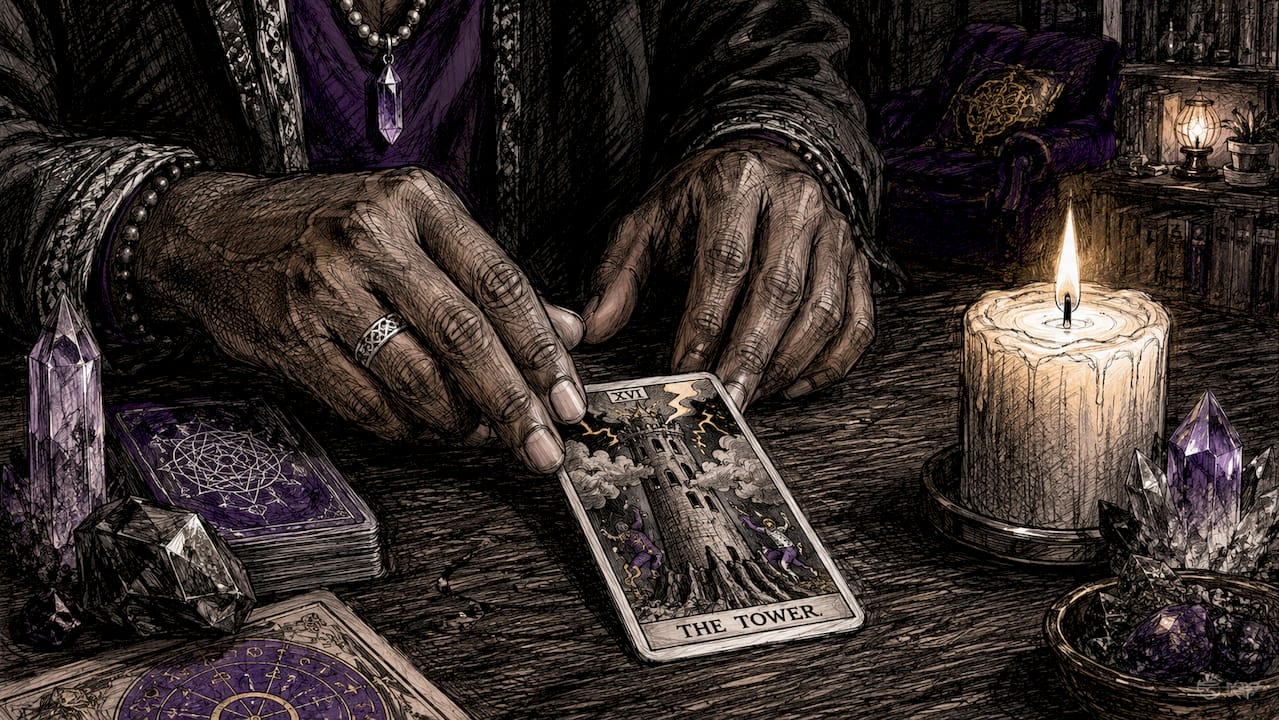
Tarot imagery engages archetypal and subconscious patterns that the rational mind tends to skip over. A card like the Tower or the High Priestess does not require you to analyze it immediately. You can simply notice what you feel when you look at it. That noticing is mindfulness in action.
The ritual structure of a card draw also matters. Shuffling slowly, setting an intention, and placing a card face up all signal to your nervous system that this is a moment of deliberate attention. That signal is what separates a mindful tarot practice from a casual card flip.
Pro Tip: Frame your card draw question in the present tense. "What do I need to notice right now?" works far better than "What will happen next week?" Present-tense questions keep your attention on current awareness rather than future anxiety.
How do tarot and meditation work together as a daily habit?
The most effective structure for combining tarot with meditation is called the sandwich ritual. You meditate briefly before drawing a card, draw and observe, then meditate again after. This approach holds card imagery in open awareness rather than rushing straight to interpretation.
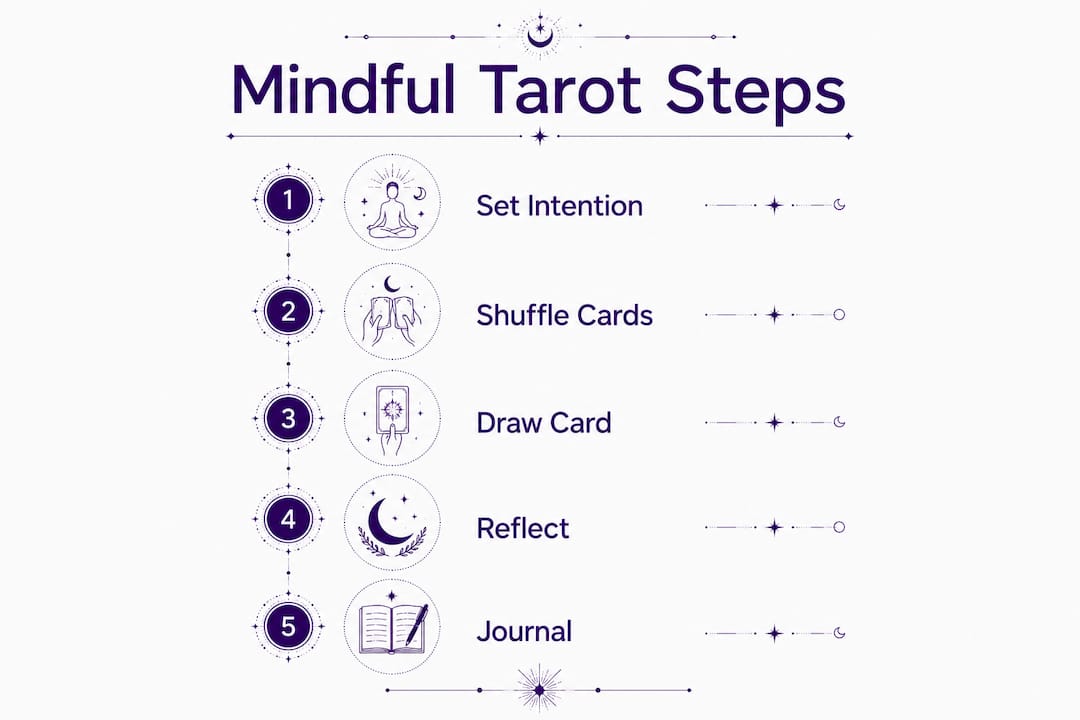
Here is a beginner-friendly version of the sandwich ritual:
- Sit quietly for two to five minutes. Focus on your breath and let thoughts settle.
- Hold your deck and set a simple intention, such as "Show me what I need to see today."
- Draw one card. Look at it without speaking or writing for at least sixty seconds.
- Notice your first emotional reaction. Do not judge it. Just name it.
- Sit in silence again for one to two minutes, holding the image in mind.
- Write in a journal for five minutes using the card as your starting point.
The journaling step is where insight becomes habit. Prompts that work well include: "What feeling did this card bring up?" and "Where in my life does this image feel relevant?" and "What would it mean to act from this card's energy today?" These questions translate a symbolic image into present-moment self-awareness.
For readers ready to go deeper, a three-card spread adds useful structure. Draw one card for what is present, one for what is hidden, and one for what supports you. This format encourages self-reflection through tarot without pushing toward prediction or fixed outcomes.
Clients who practice meditation before their readings show greater presence and less emotional reactivity during the session. That combination deepens insight and strengthens emotional regulation over time. The feedback loop works in both directions: meditation clarifies your emotional state, and tarot gives that state a direction to examine.
What psychological benefits does mindful tarot practice offer?
Research confirms that tarot combined with mindfulness journaling supports positive changes in well-being and perceived control. Perceived control is significant because it directly reduces anxiety and increases the capacity to make clear decisions.
Tarot also surfaces unconscious resistance. When a card produces a strong negative reaction, that reaction is data. It points to an area where your rational mind has been avoiding something. Tarot taps into intuitive processes relevant to self-exploration and emotional awareness, which is why psychodynamic practitioners have incorporated it into reflective work for decades.
Mindful tarot combined with meditation increases the ability to stay present, process difficult emotions, and gain clearer direction in life choices. Practitioners observe greater depth in readings when clients approach the cards with a settled, meditative mind rather than an anxious or distracted one.
The table below compares outcomes from mindfulness practice alone versus mindfulness combined with tarot:
| Benefit area | Mindfulness only | Mindfulness plus tarot |
|---|---|---|
| Present-moment focus | Strong | Strong, with visual anchor |
| Emotional naming | Moderate | High, via card imagery |
| Subconscious access | Limited | Increased through symbolism |
| Perceived control | Moderate | Higher with journaling added |
| Self-trust over time | Gradual | Accelerated through repeated draws |
One boundary matters here. Tarot is not a replacement for professional mental health support. It is a reflective tool. If a reading consistently brings up heavy grief, trauma, or persistent anxiety, that is a signal to seek care from a qualified therapist or counselor, not a reason to draw more cards.
Pro Tip: If a card reading leaves you feeling worse rather than curious, pause the practice for that day. Mindful tarot should produce a sense of gentle inquiry, not dread. Persistent distress during readings is a clear signal to speak with a mental health professional.
How to start a mindful tarot routine without common mistakes
Starting a mindful tarot practice does not require prior knowledge of card meanings. The goal is self-reflection, not prediction. Follow these steps to build a routine that actually sticks:
- Choose one consistent time each day, morning works well because your mind is less cluttered.
- Create a simple physical space: a clean surface, a candle if you like, and your journal nearby.
- Begin with a one-card pull only. One card is enough to generate genuine reflection.
- Ask open questions. "What energy is present for me today?" beats "Will my situation improve?"
- Write at least three sentences in your journal after each draw, even if they feel obvious.
- Review your journal entries weekly to notice patterns across multiple draws.
The most common mistakes beginners make are fixating on card meanings from a guidebook before observing their own reaction, and using tarot to seek reassurance rather than awareness. Both habits pull attention away from the present and toward outcome-seeking, which is the opposite of mindfulness.
Using tarot for self-reflection works best when you treat each card as a nudge rather than an answer. A single card pull can interrupt "rush mode" and invite inner listening. That interruption is the whole point. You do not need to decode the card fully. You need to pause long enough to hear what you actually feel.
Stay open without forcing interpretation. If a card makes no sense today, write that down. Sometimes the meaning surfaces three days later when a situation in your life clarifies it. That delayed recognition is itself a mindfulness experience: you were paying attention, and the connection arrived when you were ready.
Tuning into your intuition through tarot builds self-trust gradually. Each draw where you noticed something true about yourself reinforces the habit of looking inward before looking outward for answers.
Pro Tip: Avoid yes/no questions entirely. They create binary thinking that blocks the open awareness mindfulness requires. Replace "Should I do X?" with "What do I need to understand about X right now?"
Key Takeaways
Tarot supports mindfulness most effectively when used as a structured reflective ritual that combines card draws, silent meditation, and journaling to build present-moment awareness and emotional clarity over time.
| Point | Details |
|---|---|
| Tarot as a mindfulness anchor | Card imagery gives wandering attention a concrete, emotionally rich place to land. |
| The sandwich ritual | Meditating before and after a card draw deepens awareness and slows interpretation. |
| Journaling amplifies insight | Writing three to five sentences after each draw translates symbolic prompts into daily self-awareness. |
| Psychological benefits are real | Research links mindful tarot practice to improved well-being and stronger perceived control. |
| Know the limits | Tarot is a reflective tool, not therapy. Persistent distress during readings signals the need for professional support. |
What I have learned from years of sitting with the cards
I came to tarot through meditation, not the other way around. I had been practicing breath-focused meditation for a couple of years and found it genuinely useful, but I kept hitting a wall. I could quiet my mind, but I could not always name what was underneath the quiet. The cards changed that.
What surprised me most was how quickly a single image could surface something I had been circling for weeks without landing on. The cards did not tell me anything I did not already know. They gave me a way to look directly at what I was avoiding. That is not mysticism. That is attention training with a visual prompt.
The biggest mistake I made early on was treating the cards as an answer machine. I would draw obsessively when anxious, hoping for reassurance. That habit made anxiety worse, not better. The practice only became genuinely useful when I slowed down, meditated first, and approached each draw with curiosity rather than urgency.
My honest view: tarot is not a replacement for meditation. It is a companion to it. Used together, they cover different ground. Meditation quiets the noise. Tarot points at what the quiet reveals. If you are new to both, start with the breath, then add one card a day. Give it three weeks before you judge whether it works.
— Joseph
Tarosyn's guided readings for mindful reflection
Tarosyn brings together AI-powered tarot readings, astrology, and a community of people on the same path, all in one place. If you want a structured starting point for your mindful tarot practice, a guided three-card spread gives you a clear framework without requiring any prior knowledge.

The World in a Three Card Spread on Tarosyn is a good first reading for anyone approaching tarot with mindfulness intent. It offers a past, present, and future structure that you can reframe as "what is present, what is hidden, and what supports me" for a purely reflective session. Tarosyn also connects you with others exploring personal growth through tarot, so your practice does not have to happen in isolation.
FAQ
What is the connection between mindfulness and tarot?
Mindfulness involves bringing non-reactive attention to your present experience. Tarot supports this by providing a visual prompt that directs attention to current emotional and mental states without pushing toward prediction or judgment.
Can tarot improve mindfulness for beginners?
Yes. Even a one-card pull can interrupt mental busyness and invite self-observation. Beginners benefit most from open-ended questions and brief journaling after each draw rather than focusing on card meanings.
How do tarot cards work as a meditation tool?
Tarot cards work as meditation anchors by giving the mind a concrete image to observe. The sandwich ritual, meditating before and after a draw, holds that image in open awareness and strengthens the mindfulness effect.
Does mindful tarot practice have psychological benefits?
Research links tarot combined with mindfulness journaling to positive changes in well-being and perceived control. These benefits grow with consistent practice and reflective journaling rather than occasional or prediction-focused use.
When should tarot not replace other support?
Tarot is a reflective tool, not therapy. If readings consistently produce heavy distress or surface unresolved trauma, that is a signal to seek support from a qualified mental health professional rather than continuing to draw cards alone.