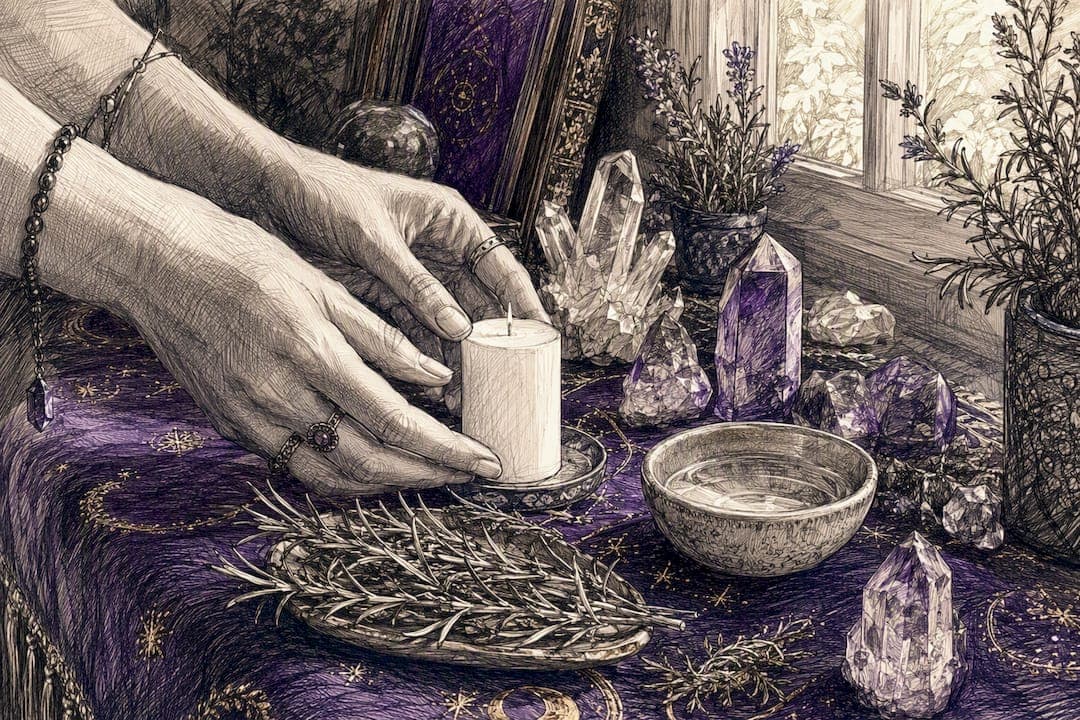
An altar is a dedicated surface that holds objects representing your intentions, elements, or spiritual focus, and you can build a working one in under 30 minutes. Start with five items: something for fire, water, earth, air, and spirit. Clear a windowsill or shelf, set them down with purpose, and you have a functioning altar tonight.
TL;DR:
- Use accessible and visible spaces like windowsills or shelves that you pass daily to ensure consistent altar use.
- Any flat surface can host an altar, with a cloth serving to protect the surface and define the sacred space, especially if it’s washable.
- The core five elements—earth, water, fire, air, and spirit—should each have a meaningful object based on your specific intention to keep the altar focused.
- Add specialized tools like tarot cards or crystals only when a particular purpose arises, avoiding clutter early on.
- Arrange objects with the spirit object at the back center, earth and water to the left, fire and air to the right, and keep the front space open for work or meditation.
Table of Contents
- How Do You Choose the Right Space for an Altar Setup?
- What Surface and Cloth Work Best for an Altar?
- What Are the Five Core Elements Every Altar Needs?
- What Optional Tools Should You Add Later?
- How Should You Arrange Items on Your Altar?
- How Do You Cleanse and Consecrate a New Altar?
- How Often Should You Maintain Your Altar?
- What Common Mistakes and Safety Issues Should You Watch For?
- Your One-Session Altar Checklist
- Why Accessible Altars Outperform Elaborate Ones
- Sources
How Do You Choose the Right Space for an Altar Setup?
Skip the fantasy of a hidden room with cathedral lighting. Location and accessibility matter more than size. A visible shelf you pass every day beats an elaborate setup tucked in a closet you forget exists. Practitioner guides consistently point to alcoves and small shelves that stay in daily view as the setups that actually get used.
Before you commit to a spot, run it through a short checklist:
- Visibility: Can you see it from where you sit or sleep? If not, you'll walk past it and forget.
- Privacy: Does it need to be shielded from roommates, kids, or guests, or can it sit in the open?
- Safety: Is it away from foot traffic, pets, and drafts that could tip a candle?
- Habit fit: Is it near something you already do daily, like your coffee spot or nightstand?
Direction traditions come up a lot. Some paths recommend facing east for new beginnings or north for grounding work. Those orientations carry meaning, but consistency and accessibility outweigh perfect alignment. A north-facing altar you visit daily beats an east-facing one you never reach because it's wedged behind a door. Pick the practical spot first. Adjust direction later if it still matters to you.
A bookshelf corner, a windowsill, or even a shoebox tucked in a drawer all count as legitimate altar spaces.
What Surface and Cloth Work Best for an Altar?
Any flat, stable surface works: a shelf, a small table, a windowsill ledge, or the top of a dresser. What matters more is what you put on top of it.
An altar cloth does two jobs. It visually separates the altar from everyday furniture, turning "that shelf" into sacred space the moment the fabric goes down. It also protects the surface underneath from wax drips, water rings, and incense ash.
Choose a cloth based on how you'll use the space:
- Cotton or linen for a simple, washable base that handles spills without fuss.
- Velvet or brocade if you want a heavier, more ceremonial feel for evening rituals.
- A placemat or small towel works fine if you're testing the waters before buying anything.
- Color can reflect your intention (green for growth, blue for calm, black for protection) but plain is fine too.
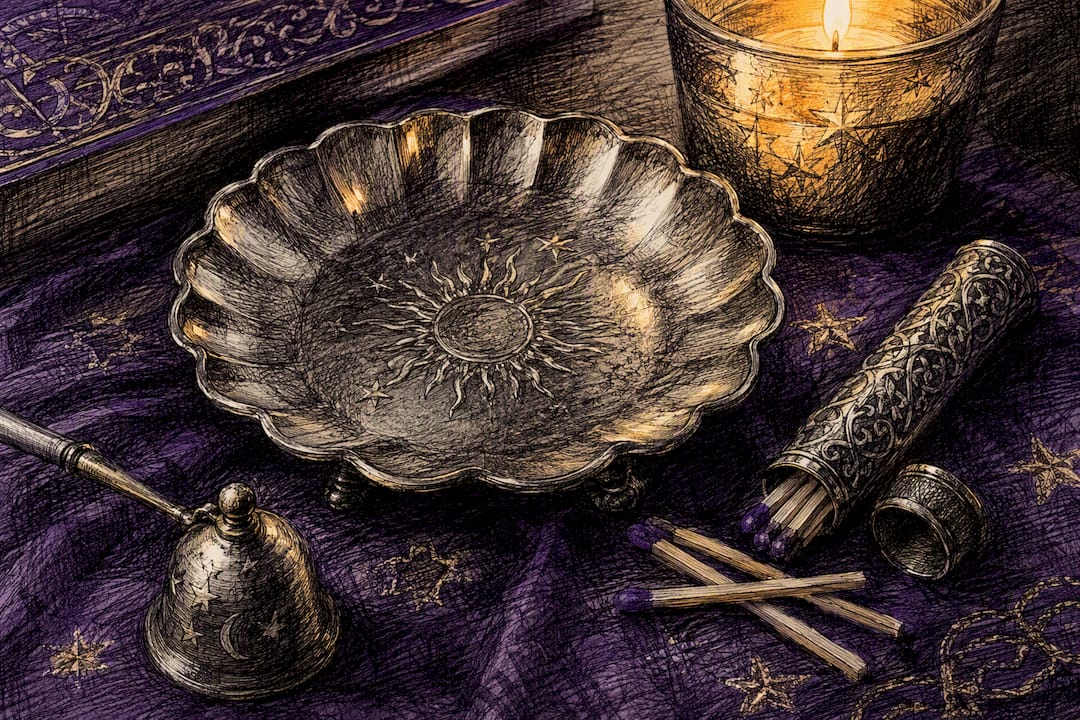
Add a small tray or dish under candles to catch wax, and a coaster or saucer under any water vessel. If you're nervous about open flame near fabric, flameless LED candles solve the problem instantly and still give you that flicker.
Pro Tip: Keep a small fireproof dish or metal tray on the altar at all times, even if you're not lighting anything today. It saves you from scrambling when inspiration strikes at 11 p.m.
What Are the Five Core Elements Every Altar Needs?
A minimal five-element altar reliably works across traditions, and it's the structure most beginner guides converge on because it's simple to build and easy to remember. Each element gets one object. You don't need a drawer full of tools to start.
- Earth: a small stone, a pinch of salt in a dish, or a potted plant.
- Air: a feather, incense stick, or a stick of dried lavender.
- Fire: a candle (real or flameless LED).
- Water: a small bowl or vial of water, sealed if you're worried about spills.
- Spirit: a personal object that represents you or the divine, such as a small figurine, a photo, or a tarot card that feels significant.
Safe substitutions matter more than purists admit. A sealed glass vial of water prevents tipping accidents. An LED candle removes fire risk entirely if you live with pets, kids, or smoke alarms that hate incense. Neither substitution weakens the symbolism. The object represents the element; it doesn't have to be the element in its rawest form.
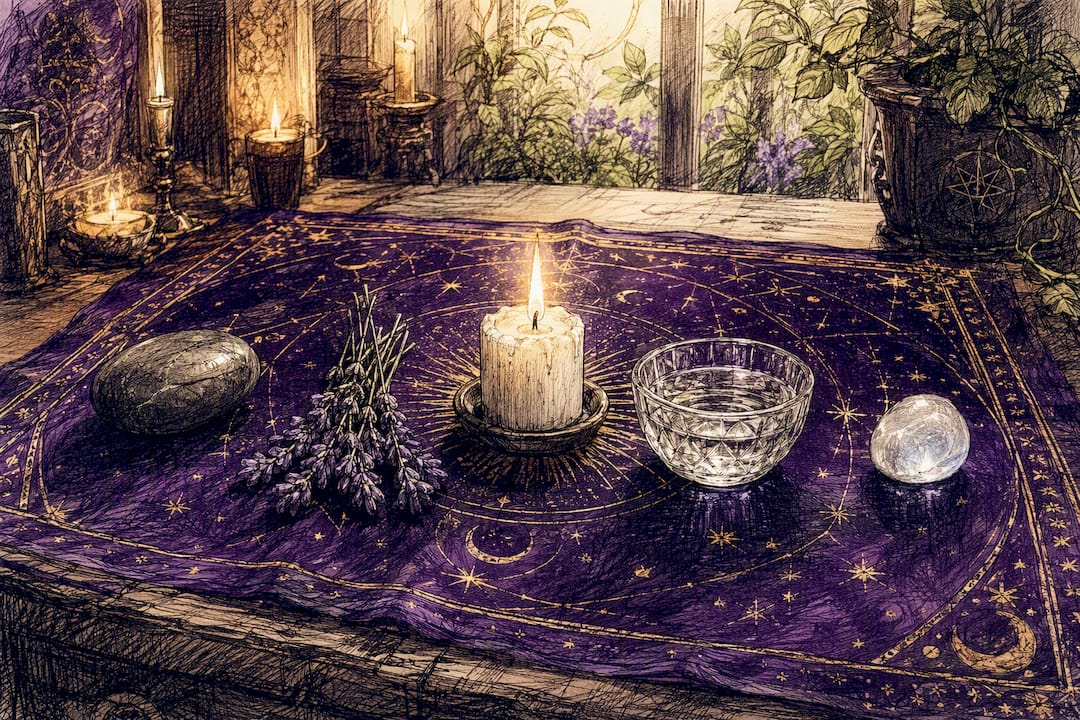
Here's a detail most beginner guides skip: pick your five items based on one single intention, not five random objects. If your focus is calm, choose a smooth river stone (earth), lavender (air), a soft white candle (fire), still water (water), and a moonstone or photo of a peaceful place (spirit). If your focus is protection, swap in black tourmaline, dried rosemary, a black candle, salt water, and an object tied to a protective figure or ancestor. One clear intention keeps the altar from turning into a junk drawer of pretty objects with no shared meaning.
What Optional Tools Should You Add Later?
Resist the urge to buy every tool in the metaphysical shop on day one. Overloading a new altar is one of the fastest ways beginners lose momentum, since long shopping lists tend to overwhelm rather than help. One or two intentional additions beat ten scattered ones.
Add tools when a specific purpose calls for them:
- Tarot or oracle cards: useful once you want daily guidance built into your ritual, not just as decoration.
- A single crystal: chosen to match your intention, not collected for variety.
- A journal: for logging what you notice after each session.
- A deity image or ancestor photo: only if that fits your specific path.
If something stops feeling useful, retire it. Store unused items in a small box nearby rather than leaving them cluttering the surface. Altars work better lean.
How Should You Arrange Items on Your Altar?
A simple beginner layout follows a logical back-to-front, left-to-right structure that most traditions recognize in some form.
- Back center: place your spirit object here. It anchors the whole altar and should be the tallest item so nothing blocks it.
- Left side: set earth and water items. Many practitioners associate the left with receptive, grounding energy.
- Right side: place fire and air items. This keeps active elements together and away from anything flammable on the left.
- Front and center: leave this space clear. It's where you'll work, whether that means pulling a tarot card, journaling, or simply sitting.
- Height order: taller items go toward the back, shorter ones toward the front, so nothing blocks your view or reach.
If your altar is a windowsill, shrink this same layout into a single row: spirit object in the middle, earth and water on one end, fire and air on the other, with a few inches of clear space in front for your hands. A shoebox altar works the same way. Stand items along the back wall of the box and keep the front third empty.
How Do You Cleanse and Consecrate a New Altar?
Before anything goes on the surface, wipe it down physically. Dust, wipe with a damp cloth, and let it dry completely. This isn't symbolic yet, it's just cleaning.
Once it's physically clean, move to energetic cleansing and consecration:
- Cleanse the space. Use smoke from sage or palo santo if you're comfortable with it and your space allows it. If not, sound (a bell, clapping, or singing bowl) or moonlight exposure works as a smoke-free alternative that's ideal for shared housing or anyone with smoke sensitivity.
- Place your five elements in the layout you've chosen.
- Speak a short dedication. Something as plain as "I dedicate this space to clarity and calm" works. You don't need elaborate wording.
- Sit with it for a minute or two before walking away, letting the space settle.
The whole sequence takes ten to fifteen minutes.
Pro Tip: If you're consecrating during a specific moon phase, a new moon suits intentions around starting something, while a full moon suits intentions around release or clarity. Neither is required, but both add a nice sense of timing if you already track lunar phases.
How Often Should You Maintain Your Altar?
A short, repeatable ritual beats an occasional elaborate one. Two to five minutes of daily practice produces far better continuity than a beautiful hour-long ceremony you only manage once a month.
Your daily version can be this simple:
- Light the candle (or switch on the LED).
- Take three slow breaths.
- State one intention or gratitude out loud or in your head.
- Blow out or switch off the candle and step away.
Beyond the daily two minutes, build in a light weekly wipe-down and a monthly refresh. Swap stale water, dust the surface, and rotate offerings at the new or full moon so the altar keeps feeling like an active practice rather than static decor. A one-line journal entry after each session (just a word or two about how it felt) gives you a record worth flipping back through months later. A quick photo every few weeks does the same job visually.
What Common Mistakes and Safety Issues Should You Watch For?
A neglected altar usually means the location was wrong, not that you failed. If dust is piling up, relocate it somewhere more visible, or set a phone reminder tied to something you already do daily, like brushing your teeth.
Fire and ethics deserve equal attention here:
- Never leave a burning candle unattended, and keep flame at least a few inches from cloth or dried herbs.
- If smoke triggers allergies or asthma, LED candles and smoke-free cleansing methods solve the problem without compromising the ritual.
- Buy palo santo, sage, and other culturally significant materials from sources that credit and compensate the communities they come from, and learn the basic context behind an item before using it.
- Skip items tied to closed practices you haven't been invited into. Substitutes exist for nearly everything.
Your One-Session Altar Checklist
Here's everything you need to finish a working altar in about 30 minutes.
| Category | Item | Quick Alternative |
|---|---|---|
| Fire | Candle | LED candle |
| Water | Small bowl of water | Sealed vial |
| Earth | Stone or salt | Small potted plant |
| Air | Incense or feather | Dried herb sprig |
| Spirit | Personal object or photo | Tarot card |
Grab what you already own at home first: a saucer, a stone from the yard, a spare candle. Fill gaps at a grocery store (candles, salt, water) or a metaphysical shop (incense, crystals, palo santo). Clean the surface, lay your cloth, place your five items in back-to-front order, and speak a one-line dedication. That's a complete setup.
Why Accessible Altars Outperform Elaborate Ones
The single biggest predictor of whether an altar sticks isn't how it looks, it's whether you can reach it without effort. Small, visible setups integrated into daily life get used. Elaborate ones tucked away for "special occasions" gather dust. Treat your altar like a habit you're building, not a shrine you're curating for guests.
Once the physical setup is solid, structure does the rest of the work. A daily tarot spread pulled at your altar gives the two-minute ritual a built-in focus instead of leaving you staring at a candle wondering what to do next. If your spirit object is a tarot card, Tarosyn's archetype guide can help you pick one that actually matches your intention instead of grabbing whatever card looks nice. For readers pairing altar work with meditation or bodywork, aligning chakras with tarot is worth exploring once your basic rhythm feels steady.
None of this requires new tools. It requires a system, and that's where most beginners quietly fall off after week two.
— Joseph Calitoy
Sources
- How To Set Up Your First Witch Altar — Sorceress Sanctuary
- The Beginner’s Guide to Creating an Altar at Home — Wild Raven's Nest
- How to Create a Home Altar: Sacred Space Guide 2026 — Thalira