
Astrology is defined as a symbolic framework that maps personality traits onto zodiac signs through elements, modalities, and ruling planets. The astrology and personality best insights come from understanding that your sun sign is only one layer of a much richer system. Astrology functions as a symbolic meaning map that links birth seasonality with temperament, supported by data from over 100 peer-reviewed studies. Psychologists treat it as a tool for self-awareness, not a fixed verdict on who you are. When you use it that way, it becomes one of the most practical frameworks for personal growth available.
1. What are the four zodiac elements and how do they shape personality?
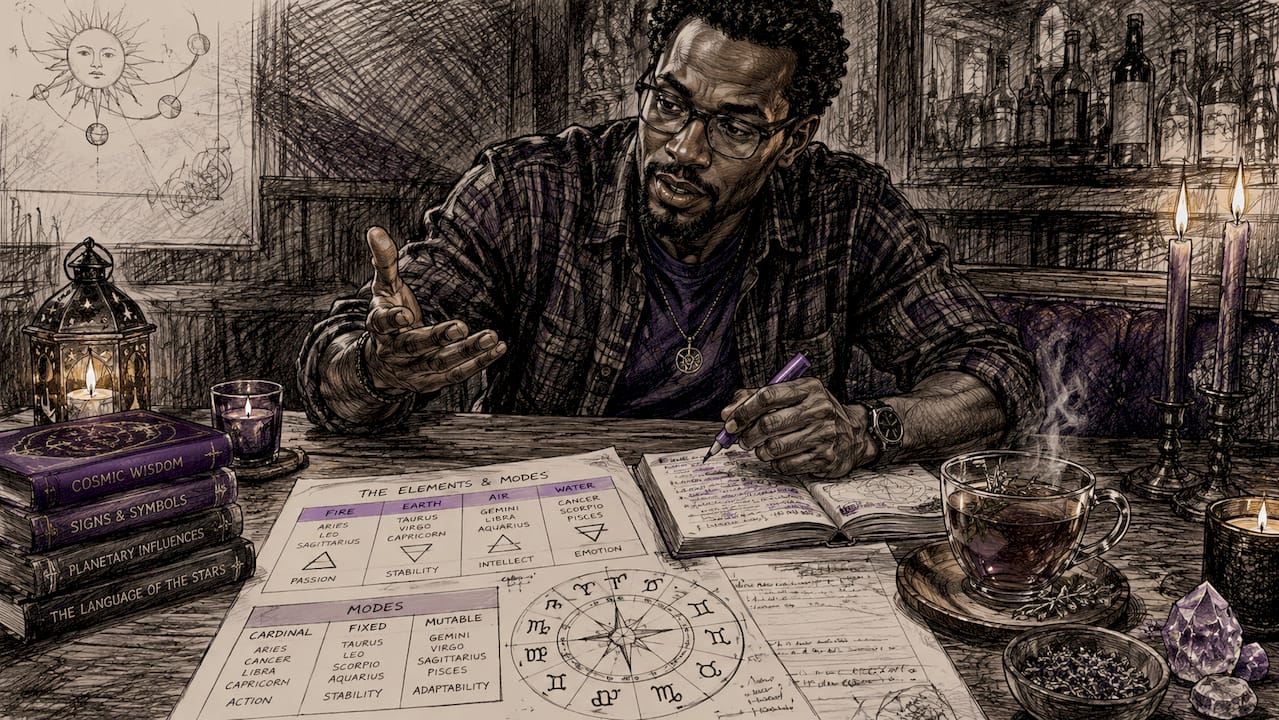
Zodiac signs are categorized into four elements representing core personality temperaments: Fire, Earth, Air, and Water. Each element groups three signs together and describes a dominant way of engaging with the world. Understanding your element gives you a fast, accurate read on your default behavioral style.
- Fire (Aries, Leo, Sagittarius): Passion, initiative, and high energy. Fire signs act first and reflect later. They thrive on challenge and tend to inspire others around them.
- Earth (Taurus, Virgo, Capricorn): Practicality, patience, and reliability. Earth signs build things that last. They value tangible results over abstract ideas.
- Air (Gemini, Libra, Aquarius): Intellect, communication, and social connection. Air signs process the world through ideas and conversation. They adapt quickly and think in systems.
- Water (Cancer, Scorpio, Pisces): Emotion, intuition, and depth. Water signs feel everything intensely. They read people well and form deep, lasting bonds.
"Elemental temperament shows neurobiological resonance with dominant brain circuits. Fire signs align with dopaminergic reward systems; Water signs align with oxytocinergic limbic systems."
That neurobiological parallel does not prove astrology is science. It does suggest that the elemental categories describe real patterns in how people process motivation and emotion.
Pro Tip: If you feel stuck in your element's shadow side, such as Fire's impulsiveness or Water's emotional withdrawal, use that awareness as a signal to practice the opposite element's strength.
2. How do the three zodiac modalities refine personality traits?
Modalities describe how a sign operates within its element. There are three modalities: Cardinal, Fixed, and Mutable. Each one shapes a distinct behavioral approach that cuts across all four elements.
- Cardinal signs (Aries, Cancer, Libra, Capricorn): These signs initiate. They start projects, lead groups, and push for change. A Cardinal sign gets restless when nothing new is happening.
- Fixed signs (Taurus, Leo, Scorpio, Aquarius): Fixed signs have persistent personalities and resist change until they are fully convinced. They finish what they start and hold positions under pressure.
- Mutable signs (Gemini, Virgo, Sagittarius, Pisces): These signs adapt. They shift direction easily and thrive in transition. Their flexibility is a strength, though it can tip into inconsistency.
Combining modality with element creates a precise personality profile. A Cardinal Fire sign like Aries leads through bold action. A Fixed Water sign like Scorpio leads through emotional intensity and quiet persistence. A Mutable Earth sign like Virgo adapts its practical skills to whatever situation demands.
Pro Tip: When you feel friction with someone, check your modalities. Two Fixed signs in conflict will both dig in hard. Knowing that pattern helps you choose a different response.
3. Top personality insights from each of the 12 zodiac signs
Ruling planets influence zodiac personality traits by giving each sign a distinct motivation and behavioral tendency. The table below summarizes the core traits, ruling planet, and primary growth edge for all 12 signs.
| Sign | Element/Modality | Ruling Planet | Core Strength | Growth Edge |
|---|---|---|---|---|
| Aries | Fire/Cardinal | Mars | Bold leadership | Patience |
| Taurus | Earth/Fixed | Venus | Steadiness | Flexibility |
| Gemini | Air/Mutable | Mercury | Communication | Follow-through |
| Cancer | Water/Cardinal | Moon | Empathy | Boundaries |
| Leo | Fire/Fixed | Sun | Confidence | Humility |
| Virgo | Earth/Mutable | Mercury | Precision | Self-compassion |
| Libra | Air/Cardinal | Venus | Diplomacy | Decisiveness |
| Scorpio | Water/Fixed | Pluto | Depth | Trust |
| Sagittarius | Fire/Mutable | Jupiter | Vision | Commitment |
| Capricorn | Earth/Cardinal | Saturn | Discipline | Rest |
| Aquarius | Air/Fixed | Uranus | Originality | Emotional openness |
| Pisces | Water/Mutable | Neptune | Imagination | Groundedness |
A few signs deserve extra attention because their traits are widely misread.
- Scorpio is often labeled secretive or cold. The real driver is self-protection. Scorpio's depth of feeling is unmatched in the zodiac. Once trust is established, Scorpio is among the most loyal signs. Check the Scorpio horoscope for daily insight into this sign's emotional landscape.
- Capricorn looks workaholic from the outside. Saturn's influence creates a genuine need to build something lasting. Rest is not laziness for Capricorn. It is a skill that requires conscious practice.
- Pisces absorbs the emotions of everyone nearby. Neptune influences Pisces' imagination and sensitivity in equal measure. The growth edge is learning to distinguish your own feelings from those you have absorbed from others.
Understanding personality through astrology at this level of detail moves you past sun sign generalizations. You start to see why a Leo and a Sagittarius, both Fire signs, behave so differently. Leo's Fixed modality makes it hold its position; Sagittarius' Mutable modality makes it pivot constantly.
4. What does research say about astrology's validity in personality studies?
Studies show small but meaningful correlations between zodiac element groups and Big Five personality traits, particularly Extraversion and Neuroticism. That finding does not validate astrology as a predictive science. It does confirm that the elemental categories capture something real about behavioral tendencies.
"Astrology provides comfort and a framework for self-identity when traditional institutions fail to offer guidance. Psychologists view it as a tool for developing unique personal gifts rather than deterministic fate."
Confirmation bias also plays a documented role. People with high knowledge of astrology are more likely to exhibit traits associated with their zodiac sign. This is a self-fulfilling prophecy mechanism. You read that Aries is bold, you identify as Aries, and you start acting bolder. The belief shapes the behavior.
That is not a flaw in astrology. It is actually one of its most useful features. If the symbolic framework gives you permission to own a strength you already have, the outcome is real regardless of the mechanism. The key is to use it consciously, not to let it become a ceiling.
| Perspective | What it says | What it means for you |
|---|---|---|
| Symbolic framework | Astrology maps archetypes onto personality | Use it as a self-reflection tool |
| Neurobiological | Elements align with brain circuit patterns | Elemental traits describe real tendencies |
| Psychological | Confirmation bias reinforces zodiac traits | Belief in your sign can shape your behavior |
| Scientific limits | No causal mechanism proven | Do not treat astrology as deterministic |
Key takeaways
Astrology's best personality insights come from combining zodiac elements, modalities, and ruling planets into a layered profile that supports conscious self-awareness and growth.
| Point | Details |
|---|---|
| Elements define core temperament | Fire, Earth, Air, and Water each describe a distinct way of engaging with the world. |
| Modalities shape behavioral style | Cardinal, Fixed, and Mutable signs differ in how they initiate, sustain, or adapt to situations. |
| Ruling planets add motivation | Each planet gives its sign a specific drive, from Saturn's discipline to Neptune's imagination. |
| Research supports symbolic use | Small correlations with Big Five traits confirm elemental categories describe real patterns. |
| Confirmation bias is a feature | Believing in your sign's strengths can actively reinforce positive behavioral change. |
Astrology as a mirror, not a verdict
I have spent years reading birth charts and watching people react to what they find. The most common mistake is treating a zodiac profile as a fixed identity. Someone reads that Taurus is stubborn and decides that settles it. They stop questioning the behavior because the stars said so.
The more useful approach is to treat every trait as information. Taurus' stubbornness is also Taurus' reliability. The same quality that frustrates people in conflict is the quality that makes Taurus the person you call when everything is falling apart. Astrology is best used as a tool for conscious self-awareness, not as a fixed fate.
What I find genuinely valuable is using the birth chart to locate your growth edges. A birth chart offers a nuanced roadmap for personal development that goes well beyond the sun sign. Your rising sign shapes how others see you. Your moon sign governs your emotional needs. When you read all three together, the picture becomes specific enough to act on. That specificity is where astrology earns its place as a self-discovery tool rather than entertainment.
— Joseph
Personalized astrology readings on Tarosyn
Tarosyn brings together AI-powered astrology, tarot, and numerology in one place so you can go deeper than a sun sign summary.
You can pull a daily horoscope for your sign each morning and track how the themes shift over time. For a more personal read, Tarosyn's tarot spreads connect directly to personality and emotional dynamics. The Two of Pentacles three-card spread is a strong starting point if you are working through questions of balance and priorities. Tarosyn also hosts a community where readers share reflections and readings, so your self-discovery does not happen in isolation. You can also explore personal growth tarot topics to connect astrological insights with practical next steps.
FAQ
What is the most accurate part of astrology for personality?
The combination of your sun sign, moon sign, and rising sign gives the most accurate personality picture. Each layer describes a different dimension of how you think, feel, and present yourself to others.
How do zodiac elements relate to personality traits?
The four elements (Fire, Earth, Air, Water) each describe a core temperament. Fire signs are action-oriented, Earth signs are practical, Air signs are intellectual, and Water signs are emotionally driven.
Does science support astrology's personality insights?
Studies show small but meaningful correlations between zodiac element groups and Big Five personality traits. Astrology is not a predictive science, but its symbolic categories align with documented behavioral patterns.
What is the difference between a sun sign and a rising sign?
Your sun sign reflects your core identity and conscious personality. Your rising sign, also called the ascendant, shapes how other people perceive you and how you present yourself in new situations.
Can astrology help with personal growth?
Yes. Viewing your birth chart as a roadmap helps identify shadow sides and growth edges. The most effective use of astrology is recognizing your patterns and choosing how to respond to them, rather than accepting them as fixed.