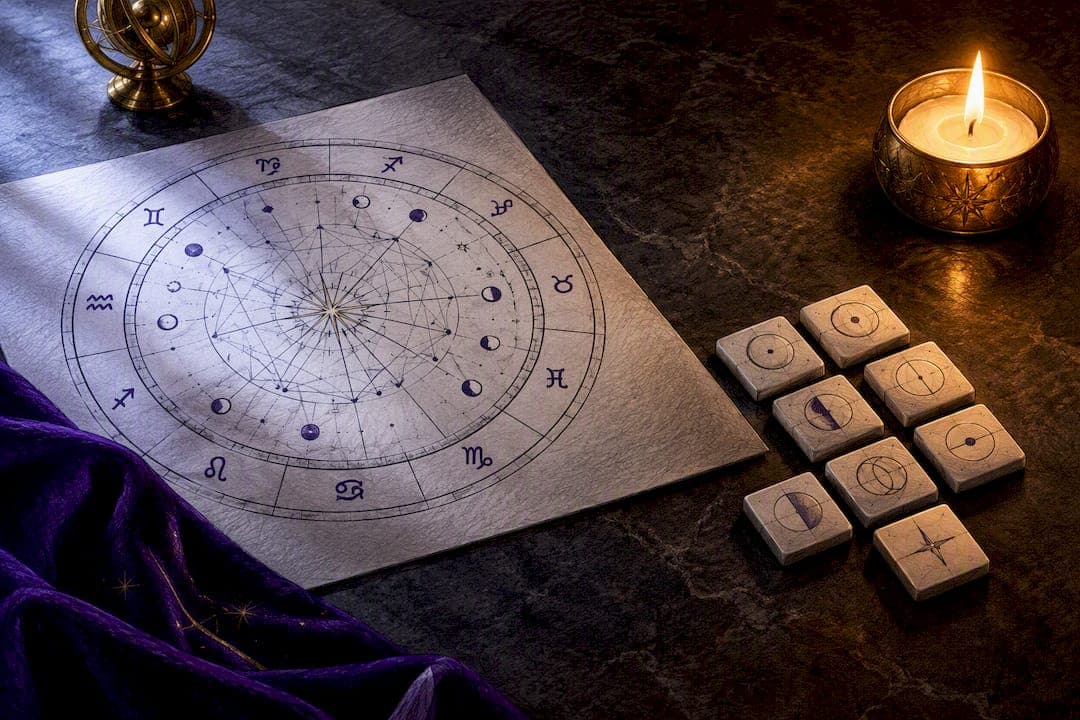
Astrology reads the sky at the moment you were born; numerology reads the numbers in your name and birthdate. Astrology wins on timing and relationship nuance because it tracks moving planets against a fixed chart. Numerology wins on speed and clarity because it needs no birth time, just a date and a name. Experts suggest a practical rule: use astrology when timing matters, numerology when you want a fast read on identity, and combine both when you want the fuller picture.
TL;DR:
- Astrology provides detailed timing insights when your birth time is exact, but is limited if the birth time is unknown or imprecise.
- Numerology offers quick identity assessments using only your full name and birthdate, making it accessible without detailed birth data.
- Both systems' accuracy heavily depends on practitioner skill and the quality of reported data, with vague readings and confirmation bias affecting reliability.
- Use numerology for personal and yearly pattern recognition and astrology for timing decisions involving relationships or specific events.
- Tracking outcomes over months, not days, enhances understanding of each system's practical value and helps verify their predictive relevance.
Table of Contents
- Astrology vs. Numerology: How Each System Actually Works
- How Accurate Is Astrology or Numerology, Really?
- How to Get Your First Numerology and Astrology Reading
- When Numerology, Astrology, or Both Make Sense
- How Tarosyn Blends Astrology and Numerology in One Place
- Where Astrology and Numerology Actually Came From
- The Main Branches Inside Astrology and Numerology
- What Science Says About Astrology and Numerology
- A Reader's Perspective: Stay in the Driver's Seat
- Try a Blended Reading on Tarosyn
- Sources
- FAQ
Astrology vs. Numerology: How Each System Actually Works
The two systems ask for different raw material, and that difference explains almost everything else about how they behave.
Astrology needs your exact birth date, time, and location. Skip the birth time and you lose your rising sign and house placements, which are the parts of the chart that get specific about timing and daily life. Astrology maps planetary positions at the moment of birth onto signs, houses, and aspects, then tracks how current planetary movement, called transits, activates that original chart. A birth chart works like a snapshot that keeps getting reread as the sky moves.
Numerology needs only your full birth name and birthdate. Numerology reduces those inputs into core numbers: Life Path (your general direction), Expression (how you show up), and Soul Urge (what you actually want). Cycles run on Personal Year numbers instead of planetary transits, and certain totals, called master numbers, get read without reducing them further.
The mechanical differences break down like this:
- Astrology is dynamic. The same natal chart produces different readings depending on the date you ask about, because transiting planets keep shifting.
- Numerology is comparatively fixed. Your Life Path number doesn't change; only your Personal Year cycles.
- Astrology's learning curve is steeper. Understanding aspects and house rulerships takes real study.
- Numerology's learning curve is shorter. Basic addition gets you to a usable number in minutes.
- Astrology answers timing questions better ("when should I make this move?").
- Numerology answers identity questions faster ("what's my core pattern?").
Neither approach is inherently more advanced. They're built to answer different kinds of questions, and that's the real reason so many people end up using both.
How Accurate Is Astrology or Numerology, Really?
Neither system carries mainstream scientific validation, and any honest comparison starts there. What varies isn't the method's inherent truth. It's the skill of the practitioner and the quality of the data you hand them.
Astrology tends to feel more specific when the birth time is exact and the question involves timing: "Is this a good month to change jobs?" gets a more textured answer from a transit reading than from a Personal Year number. Numerology often wins on practicality when you want a quick decision lens or don't have a documented birth time. Plenty of people never confirm the exact minute they were born, which quietly limits how far astrology can go.
Three pitfalls distort accuracy for both systems:
- Confirmation bias. Readers tend to remember the lines that fit and forget the ones that missed.
- Vague phrasing. A reading written broadly enough will fit almost anyone, which feels accurate without being specific.
- Misreported birth data. A birth certificate with an estimated time, or a legal name that differs from a nickname used casually, throws off both systems in different ways. Misconceptions about exact birth time run in both directions: it matters more for astrology than most people assume, and less for numerology than most people assume.
Pro Tip: Write down a reading's specific claims before you know the outcome, then check back in a month. Vague readings evaporate under that test; specific ones either hold up or don't.
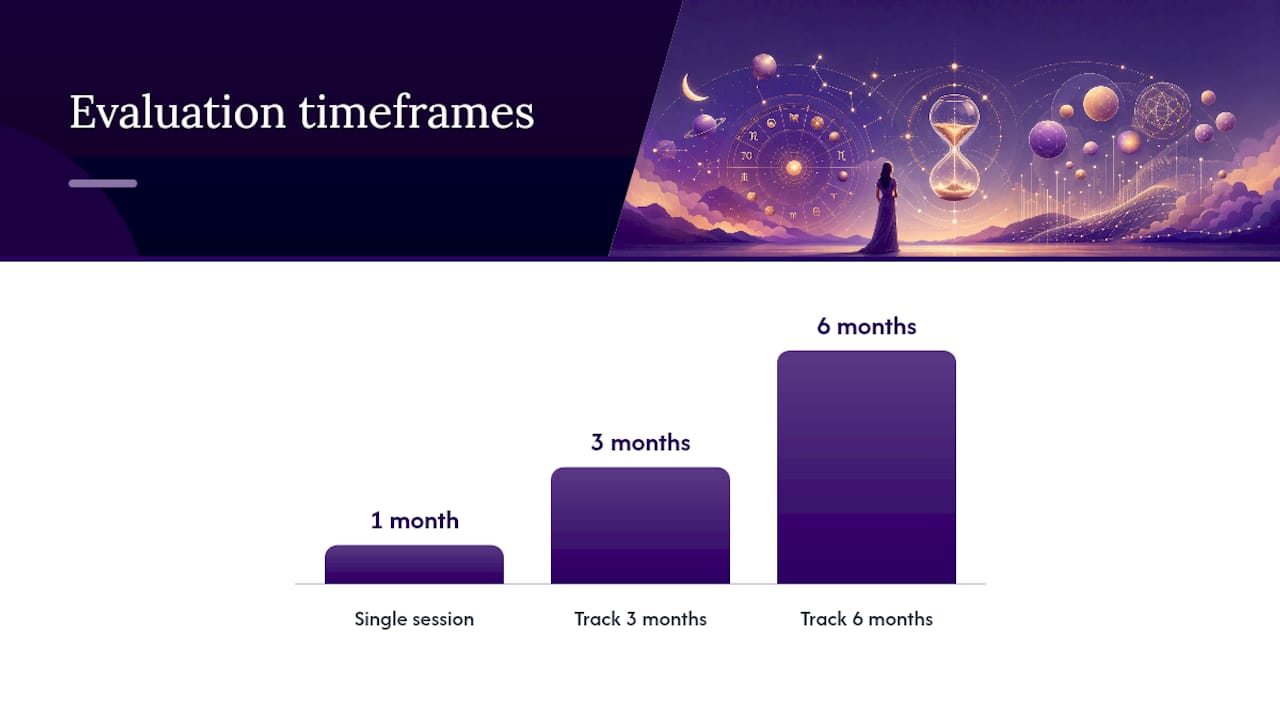
A fair evaluation takes time. Record what a chart or a number-based reading tells you, then track real events against it over three to six months rather than judging from a single session.
How to Get Your First Numerology and Astrology Reading
Start with numerology if you want something today.
- Calculate your Life Path number by reducing your full birthdate to a single digit (keep 11, 22, or 33 unreduced).
- Calculate your Expression number from the letters in your full birth name using standard letter-to-number values.
- Calculate your Soul Urge number from just the vowels in that name.
- Read the three together for a baseline personality snapshot, then note your current Personal Year number for near-term themes.
- Set a three-month observation window and jot down where the Personal Year theme shows up in real decisions.
For astrology, the process takes a bit more setup:
- Gather your exact birth date, time, and location. A birth certificate or hospital record is the most reliable source.
- Generate your natal chart and identify your Sun, Moon, and rising sign first, since those three carry the most weight for a beginner reading.
- Pick one current transit affecting a personal planet and read what it suggests for the next few weeks.
- Set the same three-month window used for numerology and log specific events against the transit's themes.
Ask each system pointed questions rather than open-ended ones, and if a chart or number set feels genuinely confusing, a professional reading is worth the cost before you draw conclusions from a self-read chart.
When Numerology, Astrology, or Both Make Sense
Numerology tends to fit quick, identity-level questions: choosing a business name, clarifying a sense of life purpose, or planning around your current Personal Year cycle. Astrology fits questions with a timing or relational dimension: when to schedule a big decision, or how two people's emotional patterns interact through synastry.
A simple blend works for most people: use numerology first to name the pattern, then use astrology to time when that pattern is likely to activate. Someone weighing a career change might see a Personal Year 1 (new beginnings) line up with a Jupiter transit crossing their career house. That overlap is worth acting on. A Personal Year 1 with no supporting transit might mean the timing isn't quite right yet.
- Use numerology for naming decisions, self-concept, and annual planning.
- Use astrology for relationship dynamics and pinpointing timing.
- Use both when a decision has real weight and you want more than one data point.
Keep expectations modest either way. Usefulness shows up as a pattern over months, not a single dramatic prediction that lands.
How Tarosyn Blends Astrology and Numerology in One Place
Tarosyn brings tarot, astrology, and numerology together with journaling and community features built around one goal: making it easier to actually track whether a reading held up.
- Daily horoscopes and synastry compatibility readings cover the timing and relationship side of astrology.
- Numerology tools generate Life Path and cycle numbers without manual math.
- Journaling features let you log predictions and revisit them months later, which is the single most reliable way practitioners judge whether either system is working.
- A social layer lets you compare notes with others tracking their own charts and numbers.
Astrologer and numerologist Joseph Calitoy, whose analysis informs this comparison, argues that the real value of either system shows up only when you track outcomes rather than trusting a single session.
Where Astrology and Numerology Actually Came From
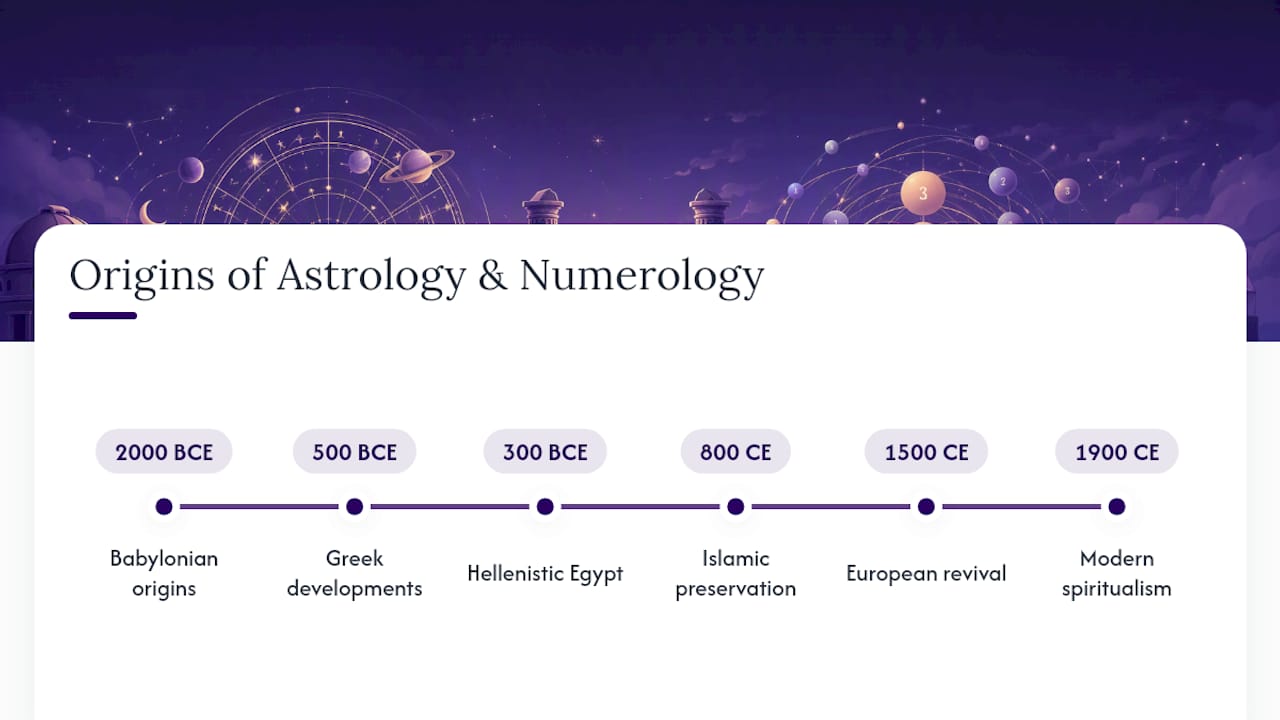
Astrology's roots trace back roughly 4,000 years to Babylonian sky-watchers who tracked planetary movement against the horizon for omens tied to kings and harvests. Greek astronomers later added the zodiac and the twelve-house system, and Hellenistic Egypt refined much of the chart structure still used today. Separate astrological traditions grew independently in China, India (Jyotish), and Mesoamerica, each tying planetary or stellar cycles to different cultural frameworks.
Numerology's most cited lineage runs through Pythagoras in Ancient Greece, who taught that numbers held vibrational meaning beyond simple counting. Long before Pythagoras, though, Chaldean scholars in ancient Babylon had already built number-based interpretive systems, and Hebrew mysticism developed its own numeric framework called Gematria, assigning meaning to letters through numeric value.
Both systems moved through the same historical channels: Islamic scholars preserved and expanded astrological and numerological texts during the medieval period, European occultists revived both during the Renaissance, and 19th and 20th century spiritualist movements repackaged them for popular audiences. That shared path is part of why the two so often get taught side by side, and why numerology, astrology, tarot, and palmistry show up together in so many practitioner traditions rather than as separate, unrelated fields.
The Main Branches Inside Astrology and Numerology
Astrology splits into several distinct practices, not one single method. Natal astrology reads the birth chart itself, the version most people mean when they say "astrology." Horary astrology answers a specific question based on the chart cast for the exact moment the question was asked, a much older and more niche technique. Electional astrology picks a favorable time to start something, like a wedding date or a business launch. Mundane astrology applies chart analysis to world events, cities, and nations rather than individuals.
Numerology has its own branching, mostly by counting system. The Pythagorean system, most common in the West, assigns numbers to letters in a straightforward sequential order and is what most online numerology calculators use. The Chaldean system, older and more complex, assigns numbers based on sound and vibration rather than alphabetical order, and it treats compound numbers differently before reducing them. Kabbalistic numerology, tied to Hebrew Gematria, layers numeric meaning onto sacred text and names. Each branch can produce a different Life Path or Expression number from the exact same name, which is worth knowing before comparing results from two different calculators.
What Science Says About Astrology and Numerology
Mainstream science treats both astrology and numerology as unproven, and that's not a minor caveat. No peer-reviewed research has produced a reliable mechanism explaining how planetary positions or letter-based numbers would influence personality or events. The most common scientific critique of astrology centers on the Barnum effect: descriptions written broadly enough that almost anyone reading them will find something that fits, regardless of their actual birth chart.
Numerology draws a related criticism. Reducing a name or date to a single digit strips away enough specificity that the resulting number often reads as universally applicable rather than personally revealing. Critics also point out that numerology's letter-to-number system is arbitrary. There's no reason A must equal 1 rather than 26, beyond the convention a given school chose to adopt.
None of that erases the reflective value either system offers. A framework that prompts genuine self-examination can be useful as a structured journaling tool even without predictive power. The distinction worth holding onto is between explanatory claims (these numbers or planets cause outcomes) and reflective claims (this framework helps me notice patterns in my own choices). The second claim survives scientific scrutiny far better than the first.
A Reader's Perspective: Stay in the Driver's Seat
Try both systems and write down what actually happens, not what you expected to happen. Treat every reading as a prompt for reflection, never as a directive for medical, legal, or major financial decisions. The number or the chart can point somewhere useful. You still decide what to do with it.
— Joseph Calitoy
Try a Blended Reading on Tarosyn
Tarosyn gives you one place to run both systems side by side instead of juggling a separate astrology app and a separate numerology calculator. Start free: the daily horoscope and public reading feed are open to everyone, no birth data required to browse.

From there, generate your natal chart and daily transits or explore public tarot readings and community insights to see how others are tracking their own cycles. If the combination clicks, the Mystic monthly plan runs $7.99 per month, the Annual circle plan runs $59.99 per year, and Luna packs add extra tools on top for readers who want more depth. All three are available on the Tarosyn subscription page, where you can compare what each tier unlocks before committing to anything.
Sources
- Differences between Astrology and Numerology - The Times of India
- Astrology vs Numerology: Divination Systems Compared 2026 - Thalira
FAQ
Is Astrology or Numerology More Accurate?
Neither has mainstream scientific validation, so "more accurate" depends on the question and the practitioner. Astrology tends to be sharper for timing questions when your birth time is exact, while numerology is often more practical for a quick identity read.
Which Is Better for Self-Discovery, Astrology or Numerology?
Both work as self-discovery tools, just at different speeds. Astrology tends to reveal layered, evolving patterns over time, while numerology delivers a faster, more condensed snapshot of core traits.
Can I Use Astrology and Numerology Together?
Yes, and many practitioners recommend it. Use numerology to identify a core pattern, then use astrology's transits to time when that pattern is likely to show up.
What Information Do I Need for Each System?
Numerology needs your full birth name and birthdate. Astrology needs your exact birth date, time, and location, since a missing birth time removes your rising sign and house placements.
Does Tarosyn Cost Anything to Try?
Tarosyn's daily horoscope and public readings are free to browse without a subscription. Paid plans start with Mystic monthly at $7.99 per month or Annual circle at $59.99 per year, both listed on the Tarosyn site.