
Astrology creates shared identity by giving people a common symbolic language and ritual practices they can use to label experience and connect with others. When someone posts "Mercury retrograde is ruining my week" on TikTok and thousands of people reply "same," that is not just humor. It is a shared belief system functioning as social glue, studied by researchers in journals like New Media & Society and built into platforms like Tarosyn.
Here is what makes it work:
- Shared symbolic grammar: Signs, planets, and aspects give everyone the same vocabulary to describe personality and life events.
- Ritual repetition: Daily horoscopes, new moon intentions, and chart readings create recurring group practices.
- Platform amplification: TikTok, Instagram, and Reddit spread astrological language to millions, lowering the barrier to entry.
- Emotional and social functions: Belonging, coping with uncertainty, and relationship sensemaking all get scaffolded by astrological frameworks.
A typical Instagram post reads: "Scorpio season hits different when you finally understand your chart. Who else is feeling the shift? #ScorpioSeason #AstroTwitter #BirthChart." That single post signals group membership, invites others in, and uses shared vocabulary that only insiders fully recognize.
Table of Contents
- How astrology creates shared identity through symbols and sensemaking
- How online platforms scale astrological community identity
- What shared astrological identity does for people
- What does the research actually show about astrology and shared identity?
- What are the risks and limits of astrology-based shared identity?
- How to responsibly engage with or study astrology communities
- How Tarosyn puts shared astrological identity into practice
- Key Takeaways
- A perspective on what astrology's social function actually tells us
- Explore astrology and community on Tarosyn
- Useful sources and further reading
How astrology creates shared identity through symbols and sensemaking
The core mechanism is a shared symbolic grammar: a set of archetypes, planets, and aspects that people use to describe themselves and interpret events. You do not need a centralized authority to make this work. The vocabulary itself does the organizing.
Social identity theory, developed by Henri Tajfel and John Turner, explains why this matters. People categorize themselves into groups, adopt those groups' norms, and compare their group favorably to others. Astrology provides ready-made categories: twelve signs, four elements, three modalities. Once you identify as a Virgo, you have a group. Once you know your rising sign, you have a subgroup. The categories are specific enough to feel personal and broad enough to include millions of people.
Sensemaking theory, associated with organizational psychologist Karl Weick, describes how people create meaning by fitting new experiences into existing frameworks. Astrology functions as a sensemaking system: when something confusing happens, "Saturn return" or "Mars in retrograde" gives it a name and a narrative arc. That naming is not just individual. It is shared, which means the sensemaking becomes communal.
Archetypal categories deepen this further. The twelve signs map onto recognizable personality types that appear across cultures: the warrior, the nurturer, the communicator. These archetypes, as Carl Jung described them, tap into patterns people already recognize. Astrology packages them into a portable, shareable system. Research shows that astrology's archetypes and narratives function as tools for bonding people in both online and offline settings.
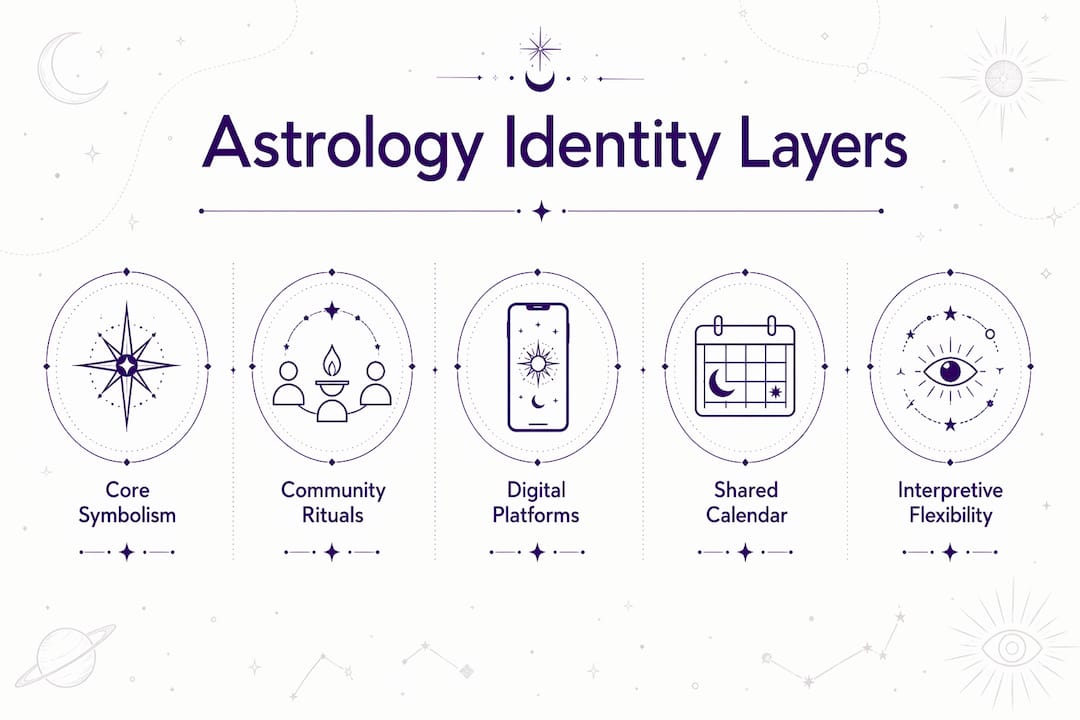
What makes the system socially durable is its interpretive flexibility. Your chart is unique, but the vocabulary for reading it is shared. Personal interpretation feeds community language and recognition, as cultural analyses observe. You can disagree about what your Scorpio moon means and still be part of the same conversation. That combination of individual autonomy and shared identification is rare in identity systems and explains why astrology scales so well across diverse groups.
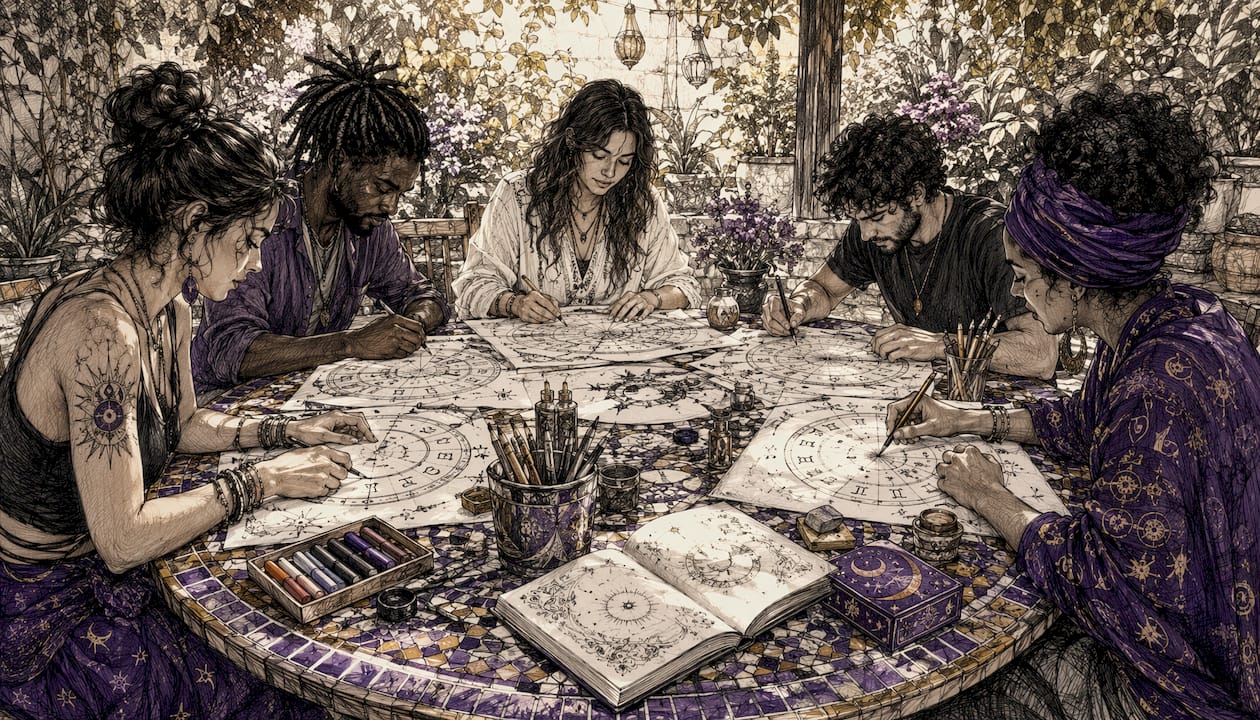
Narrative timing adds another layer. Transits, seasons, and lunar cycles give communities shared calendars. Mercury retrograde is not just a personal inconvenience; it is a collective event that millions mark simultaneously. Ethnographic research confirms that astrology's symbolic language enables solidarity while also creating fault lines, since communities of practice develop their own norms about correct interpretation.
How online platforms scale astrological community identity
Digital platforms do not just distribute astrological content. They restructure how shared identity forms, at a speed and scale that offline communities cannot match.
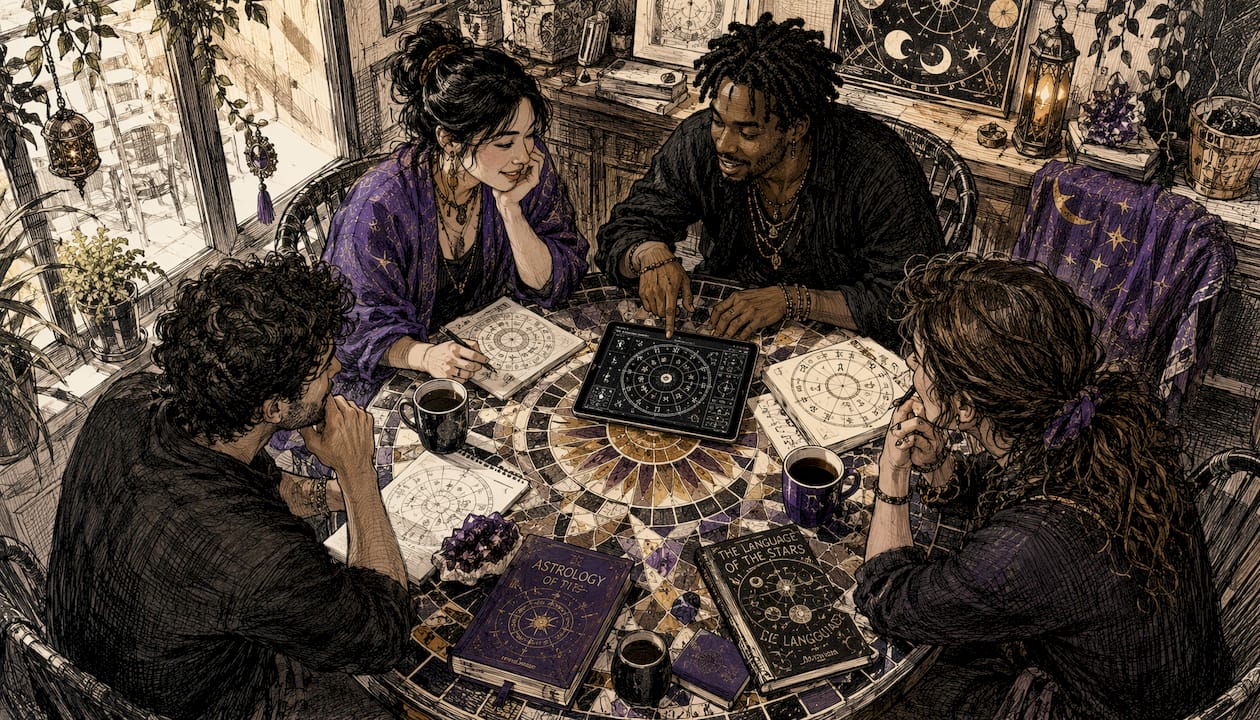
TikTok and short-video formats
TikTok's format is particularly well-suited to astrological identity. A 30-second video can introduce a transit, demonstrate a chart reading, and invite viewers to comment their sign, all within a single scroll. The comment section becomes a real-time community gathering. Memes and short videos translate complex astrological ideas into shareable, identity-signaling units, lowering the barrier to entry for newcomers. The algorithm then amplifies content that generates high engagement, which astrological identity posts reliably do because they prompt people to self-identify in the comments.
Instagram and image-based memetics
Instagram operates differently. Carousel posts walk followers through a sign's traits or a transit's meaning in a format designed for saving and resharing. Meme accounts dedicated to specific signs build loyal audiences who share posts as self-expression. A Capricorn meme shared to someone's story is not just humor; it is a public identity statement. Researchers studying astrology in digital communities note that platforms like Instagram function as ritual spaces, shaping participatory spirituality through aesthetics and interactive formats.
Reddit threads and forum depth
Reddit offers something neither TikTok nor Instagram does well: sustained, text-heavy discussion. Subreddits like r/AskAstrologers and r/Astrology host thousands of threads where users work through chart interpretations collectively. That collective process is significant. Practitioners report a hivemind effect in group readings where the community's collective interpretation exceeds what any single participant could produce alone.
A typical Reddit thread on a Pluto transit might draw 200 replies from people sharing how the transit has played out in their own lives, effectively crowd-sourcing a living archive of shared experience. The thread itself becomes a community artifact.
In-person gatherings
Offline meetups, workshops, and group chart readings create a different kind of depth. Repeated group rituals create durable social fields and emotional resonance that digital interaction rarely sustains over time. Astrology circles, new moon gatherings, and conference events like NORWAC (Northwest Astrological Conference) function as annual rituals that reinforce community bonds formed online.
What shared astrological identity does for people
Shared astrological identity serves several concrete social and emotional functions. People adopt it not because they necessarily believe in planetary causation but because it does useful work in their lives.
- Belonging: Knowing your chart gives you an instant entry point into a community. Saying "I'm a Pisces sun, Scorpio rising" to another astrology enthusiast opens a conversation that can last hours. For LGBTQ+ communities and other marginalized groups, astrology often provides non-institutional support networks where people find care outside traditional structures.
- Coping with uncertainty: Academic analysis links astrology's appeal to an age of polycrisis, where traditional identity markers feel unstable. When institutions feel untrustworthy, people turn to symbolic systems that feel adaptable and personally meaningful. Naming a difficult period as a "Saturn return" makes it feel finite and purposeful.
- Scaffolding intimacy: Asking someone their birth chart is a socially acceptable way to signal interest in understanding them deeply. Astrology gives relationships a shared framework for discussing personality differences without blame. Synastry readings, which compare two charts for compatibility, formalize this process.
- Identity signaling: Posting your placements or sharing a horoscope publicly signals group membership. It tells others what kind of person you are and what communities you belong to, functioning as a low-cost identity marker.
- Collective ritual: Marking lunar cycles, solstices, and planetary transits together creates a shared calendar that binds communities across geography. The ritual repetition builds group cohesion over time.
Pro Tip: When you notice someone framing a personal difficulty as a transit ("I'm in my Saturn return") or using sign-based language to explain behavior ("That's so Gemini"), you are watching identity signaling in real time. These phrases mark group membership as much as they describe experience.
What does the research actually show about astrology and shared identity?
Qualitative and mixed-methods studies consistently show that astrology functions as a shared grammar and community resource rather than as an empirical prediction system. The evidence base is growing, though it skews heavily toward qualitative methods.
| Study / Source | Method | Sample / Platform | Core Finding |
|---|---|---|---|
| Duquesne University dissertation (millennial women) | Depth interviews | Millennial women, US | Astrology produces self-cohesion and shared community identity conducive to compassion and connection |
| Charting the Cosmos Online (OSF preprint) | Digital ethnography, discourse analysis | YouTube, Instagram, Reddit, podcasts | Astrology functions as lived esotericism that shapes identity and belonging through digital ritual |
| Personality Systems as Narrative Identity Technology | Conceptual / philosophical analysis | Broad cultural analysis | Personality systems including astrology serve as narrative identity tools for self-curation in a secular age |
| Speaking in Celestial Signs (Berghahn Journals) | Ethnographic fieldwork | Astrology practitioners | Shared symbolic language enables solidarity but also fragmentation within communities |
| New Media & Society (DOI link) | Mixed methods | Digital astrology communities | Astrology's digital community practices reinforce identity formation through platform interaction |
Most of these studies rely on self-selected samples, which limits generalizability. Qualitative methods capture depth but cannot tell you how widespread specific practices are across the full population of astrology users. Platform-based research also faces access constraints: TikTok and Instagram do not provide researchers with comprehensive engagement data, so findings about algorithmic amplification often rest on observational rather than experimental evidence.
What are the risks and limits of astrology-based shared identity?
Shared astrological identity can produce real community benefits, but it also carries specific risks worth understanding clearly.
The most common criticism is essentialism: reducing complex people to twelve sign categories. When someone says "I don't trust Geminis" or "Scorpios are manipulative," they are using astrological identity to justify prejudice. The same symbolic system that builds community can also build walls.
Identity closure is a related problem. Tight-knit astrology communities sometimes develop gatekeeping behaviors, where members with more advanced knowledge dismiss newcomers or police interpretations. The fault lines within astrology communities are real: traditional versus modern astrology, Western versus Vedic, psychological versus predictive. These divisions can make communities feel exclusive rather than welcoming.
Commercialization is another concern. The astrology market is large, and monetized "insider knowledge" is common. Paid courses, subscription readings, and exclusive community memberships can exploit people's desire for belonging. When a community's primary function is to sell products, the shared identity it builds serves the seller more than the members.
Misinformation spreads quickly in astrology communities because the framework is unfalsifiable. Claims about planetary influences cannot be tested the way scientific claims can, which means bad information circulates without correction. Sun-sign columns in particular flatten the system's complexity into generalizations that serious practitioners reject.
Watch for these red flags in any astrology community:
- Claims that a specific interpretation is the only correct one
- Pressure to purchase readings or courses to access "real" knowledge
- Sign-based judgments used to exclude or demean people
- Leaders who discourage questioning or critical thinking
- Predictions framed as certainties rather than possibilities
To stay critical while participating: read multiple interpreters, compare interpretations across traditions, treat astrological frameworks as one lens among many, and keep financial decisions separate from astrological guidance.
How to responsibly engage with or study astrology communities
Whether you want to join an astrology community or study one, a few practical steps make the experience more useful and more ethical.
For participants:
- Listen before you speak. Spend time in a community reading posts and observing norms before contributing interpretations.
- Learn the shared vocabulary. Start with birth chart basics before engaging in advanced discussions.
- Respect personal boundaries. Someone sharing their chart is sharing personal information. Treat it with the same care you would any personal disclosure.
- Verify claims independently. Cross-reference interpretations across multiple sources before accepting any single reading as definitive.
- Notice financial pressure. Legitimate communities do not require paid membership to participate in basic discussions.
For researchers and observers:
- Document context carefully. Note the platform, community size, moderation structure, and the date of any interaction you record.
- Ask about interpretive practices. How do members decide what a transit means? Who holds interpretive authority?
- Get consent before quoting. Even public posts carry an expectation of context; quoting someone's personal chart disclosure in a research paper requires their agreement.
- Distinguish between belief and practice. Many participants use astrological language without literal belief in planetary causation. Conflating the two produces inaccurate analysis.
Questions to ask when evaluating any astrology community:
- Who moderates, and what are the stated rules?
- How are disagreements about interpretation handled?
- Is financial exchange involved, and is it transparent?
- Does the community welcome beginners or require prior knowledge?
- Are diverse astrological traditions represented or just one school?
- How does the community handle members who leave or disagree?
How Tarosyn puts shared astrological identity into practice
Disclosure: Tarosyn is the publisher of this article. The following describes Tarosyn's stated platform features as an example of how a digital spiritual platform operationalizes the mechanisms described above.
Tarosyn illustrates how product features can scale shared astrological language and ritual in a structured digital environment. The platform combines daily horoscopes, AI-powered readings, and a public community journal to create the conditions for collective identity formation described throughout this article.
Specific features map directly to the mechanisms covered above:
- Daily horoscopes: Repeated daily content creates the ritual repetition that builds group cohesion. Members who check their horoscope each morning share a synchronized practice, even when they never interact directly.
- Community journal: A public space for members to share reflections on readings and transits. This is shared storytelling in practice: individual interpretations feed into a collective archive of meaning.
- Synastry tools: Relationship compatibility readings give pairs a shared framework for discussing their dynamic, scaffolding the intimacy function described in the social functions section.
- Personalized readings: AI-powered chart interpretations give each user a unique starting point, while the shared vocabulary of signs and aspects keeps those interpretations legible to the broader community.
A practical example: a user reads their daily Scorpio horoscope, finds it relevant to a current relationship situation, and posts a reflection in the community journal. Other members respond with their own transit experiences. The individual reading becomes a community conversation, demonstrating the collective sensemaking process that researchers describe in the studies above.
Key Takeaways
Astrology creates shared identity through a common symbolic language, ritual repetition, and platform amplification that turns individual interpretation into collective meaning.
| Point | Details |
|---|---|
| Shared symbolic grammar | Signs, planets, and aspects give communities a common vocabulary for labeling personality and life events. |
| Platform amplification | TikTok, Instagram, and Reddit each scale astrological identity differently: reach, depth, and sustained discussion respectively. |
| Core social functions | Belonging, coping with uncertainty, intimacy sensemaking, and collective ritual are the primary reasons people adopt shared astrological identity. |
| Risks to watch | Essentialism, gatekeeping, commercialization, and misinformation are the main limits of astrology-based community identity. |
| Tarosyn as example | Tarosyn's daily horoscopes, community journal, and synastry tools operationalize shared astrological rituals in a structured digital platform. |
A perspective on what astrology's social function actually tells us
The debate about whether astrology is "true" misses the more interesting question: why does a symbolic system with no scientific consensus behind it produce such durable, emotionally resonant communities?
The answer, when you look at the research, is that the truth-value of the system is largely irrelevant to its social function. People use astrology the way they use any shared narrative: to make sense of experience, to signal who they are, and to find others who speak the same language. The fact that the language is planetary rather than political or religious does not make it less real as a social force.
What is underestimated is how much the system's ambiguity is a feature, not a bug. Because astrological interpretations are flexible, communities can hold diverse views without fracturing over doctrine. A Vedic astrologer and a psychological astrologer can disagree completely about method and still share a community space. That tolerance for interpretive diversity is something most identity systems cannot manage.
The risk worth taking seriously is not that people believe in astrology. It is that any identity system, once it becomes commercially valuable, attracts actors who exploit the community's desire for belonging. The same mechanisms that make astrology a powerful tool for connection make it a useful tool for manipulation. Staying aware of that tension is what separates thoughtful participation from uncritical consumption.
Explore astrology and community on Tarosyn
Tarosyn gives you a structured place to engage with astrological practices alongside a community of people doing the same work.
The platform offers daily horoscopes for every sign, AI-powered tarot and astrology readings, and a public community journal where members share reflections on transits, readings, and personal growth. You can check your sign's daily reading, post a reflection, and read how others are interpreting the same planetary moment. No prior expertise is required to start. Disclosure: Tarosyn is the publisher of this article.
Useful sources and further reading
- Understanding the Psychological Significance of Astrology in Millennial Women's Lives — Duquesne University dissertation; qualitative depth interviews on astrology's social and psychological functions.
- Charting the Cosmos Online: Astrology as Lived Contemporary Esotericism in Digital Communities — Digital ethnography and discourse analysis of astrology on YouTube, Instagram, Reddit, and podcasts.
- Personality Systems as Narrative Identity Technology — Peer-reviewed analysis of how personality frameworks including astrology function as self-curation tools.
- Astrology acts as a 'shared grammar' for navigating uncertainty — Qualitative research on astrology's sensemaking and community-bonding functions.
- Speaking in Celestial Signs — Ethnographic study of how astrological language enables solidarity and fragmentation within practitioner communities.
- Astrology's appeal in uncertain times — The Conversation; commentary on astrology's growth during periods of institutional distrust and polycrisis.
- Beyond Prediction: Explaining Astrology's Potential — Cultural analysis of astrology's dual function as individualized and social practice.
- Astrology as communal care — Practitioner essay on group readings as communal therapeutic practice.
- New Media & Society — astrology and digital community practices — Peer-reviewed research on how digital platforms reinforce astrological identity formation.